
With Chinese New Year and Hari Raya coming up, many families start thinking about taking a proper family photo. What often sounds simple can quickly become stressful. Who stands where? How do we fit everyone in? Why does it look awkward even though everyone is smiling?
The truth is, most family photos don’t fall apart because of the camera or lighting. They fall apart because of arrangement. When people are placed with intention, the photo instantly feels more balanced, connected, and meaningful. It took me years to learn some of these lessons the hard way – by evaluating my photos and finally understanding what worked and what didn’t. Thankfully, 17 years later, I have refined my thought process during every photo shoot. So here are some practical tips to help you elevate your DIY family photos, whether you’re working with a small group or a big extended family.
1. Start with the number of people and the space you have
Before thinking about poses, first be clear about how many people will be in the photo. A group of 10 people needs to be arranged very differently from a group of 20. The size of the group determines how much space you need and how creative you can be with positioning.
More space makes things easier. It allows you to spread people out, create layers, and adjust without rushing. If the space feels tight, you will need to be more intentional about who goes where. This is exactly how I plan my family sessions, especially for larger groups.
2. Arrange people by relationships, not by height
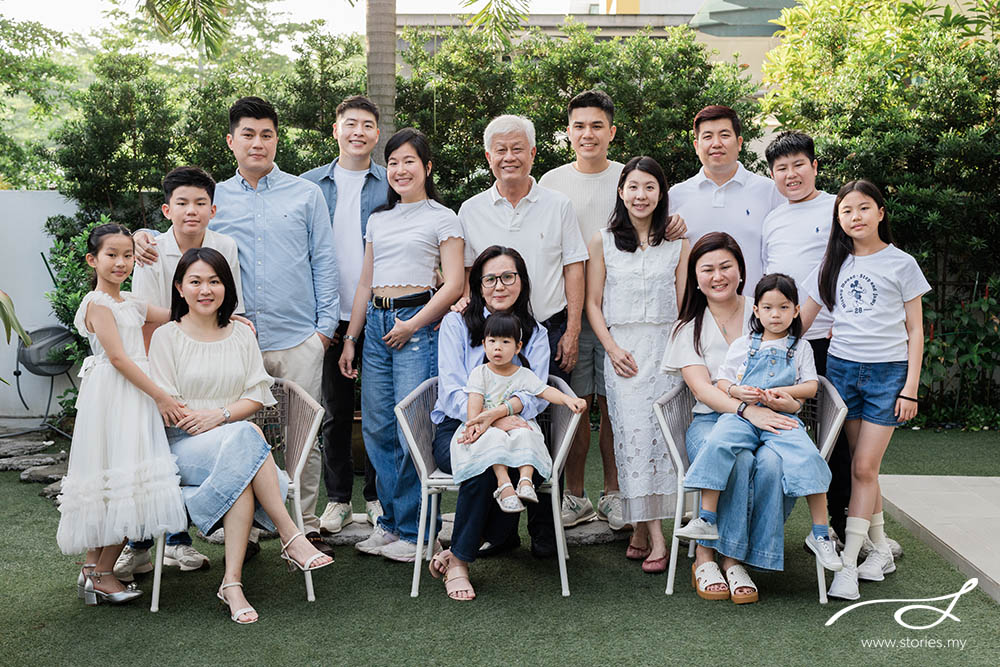
One of the most important things I look at when photographing large families is the family structure. For extended families, I often ask for a simple family tree or a list of names and relationships. This helps me understand how everyone is connected.
For example:
Grandfather and grandmother
Their eldest son and his wife with two children (with age)
Their second son and his wife with two younger children (with age)
Once relationships are clear, the arrangement becomes much easier. Knowing the age of the children helps me a lot too because positioning a 1-year-old would look different from positioning a 16-year-old. I usually place grandparents in the centre as the heart of the family. Each nuclear family stays together, with children close to their own parents instead of being placed randomly in the group.
This approach does two things. Visually, the photo feels organised and intentional. Emotionally, people feel more comfortable standing with those they are closest to, and that comfort shows in the photo.
 3. Create layers to add depth and interest
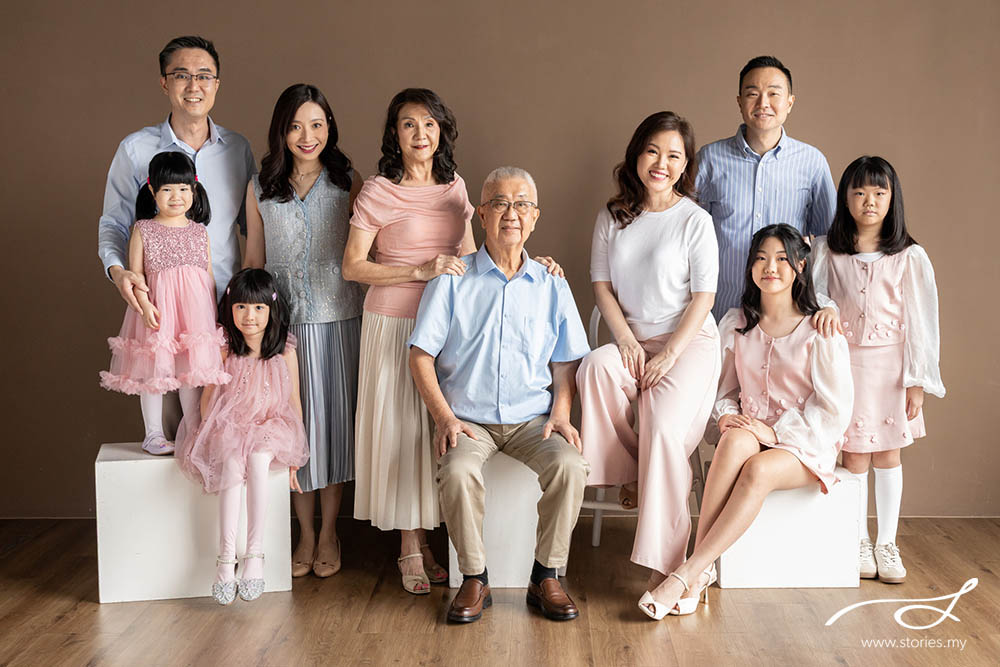
Flat rows tend to look stiff and uninspiring, especially for large groups. Instead, try to create layers by mixing sitting and standing positions.
Some people can sit on chairs or the floor, while others stand behind them. If you are outdoors, use stairs, low walls, tree roots, or rocks. Indoors, stools, boxes, or even the edge of a sofa can help create different heights.
For groups of 15 people or more, you may need two to three layers. Don’t be afraid to let children sit on the floor or stand on a higher surface with support. Layering helps everyone be seen clearly and makes the photo feel more dynamic and natural.
 4. Look for triangles and varied heights
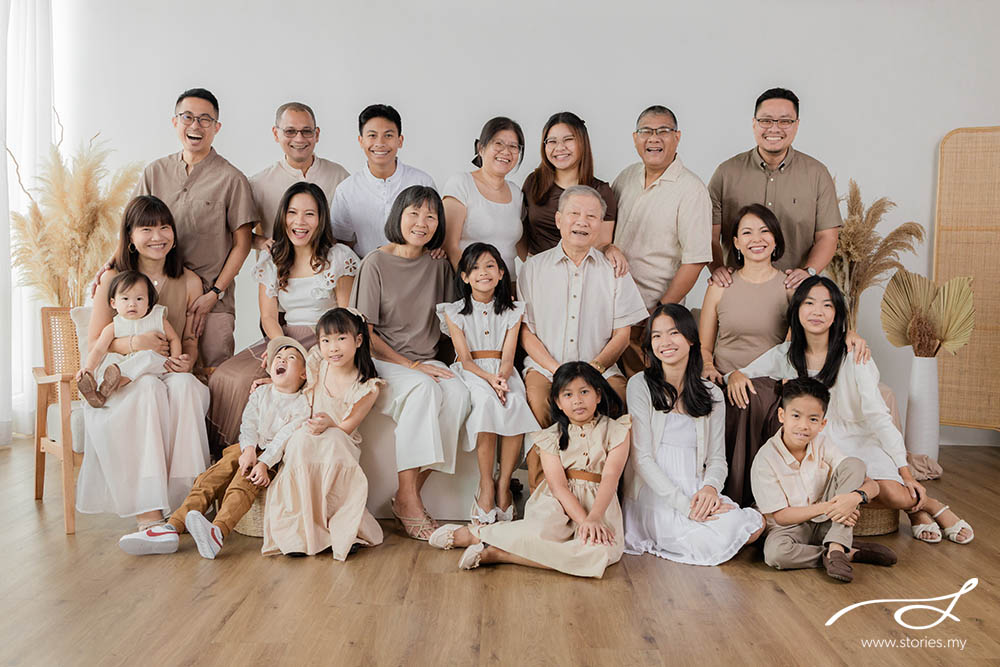
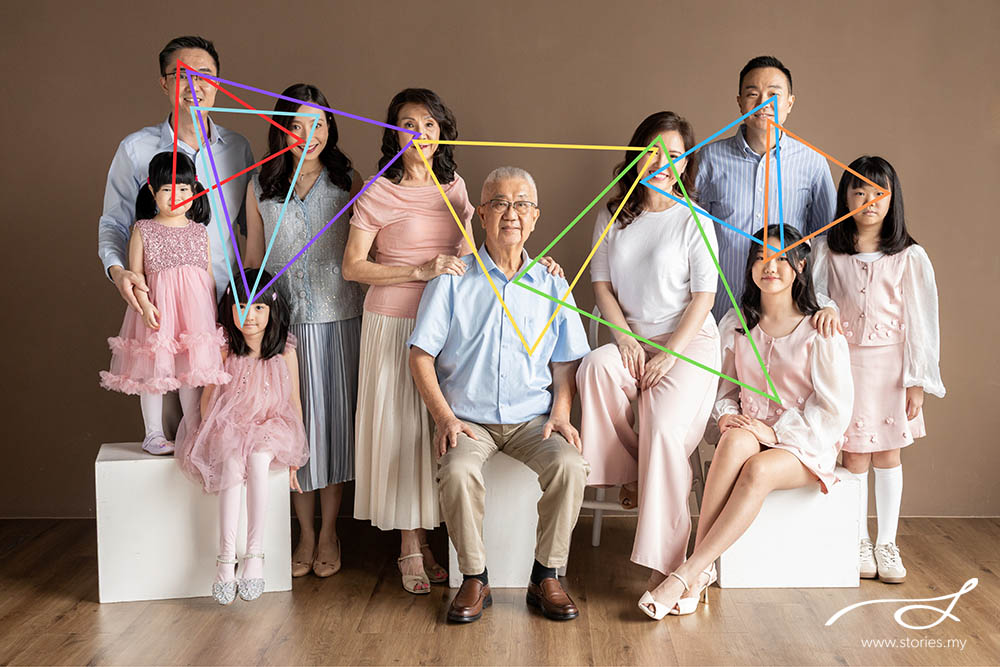
Once people are layered, pay attention to height differences. A tall person doesn’t always need to stand, and a shorter person doesn’t always need to sit. The goal is to create gentle triangular shapes throughout the photo.
These triangles guide the eye and make the composition more interesting. Think of it as creating small peaks and slopes rather than straight lines. Move people slightly, adjust where they sit or stand, and see how the overall shape changes. This is something photographers constantly fine-tune during a session, so take your time and enjoy experimenting.
 5. Using a sofa without making it look boring
Sofas are common in home photos, but they can easily look dull if everyone sits in a straight line. Try mixing things up by asking someone to sit on the armrest with their legs turned sideways, or placing a few people on the floor in front of the sofa.
If there are people standing behind the sofa, bring them as close as possible to those seated so the group feels connected. For those sitting, ask them to sit slightly forward rather than leaning back fully. This helps with posture and keeps faces closer together.
Every sofa is different. Some are deep or bulky, so not every pose will work. Adjust accordingly and see what looks best in your space.
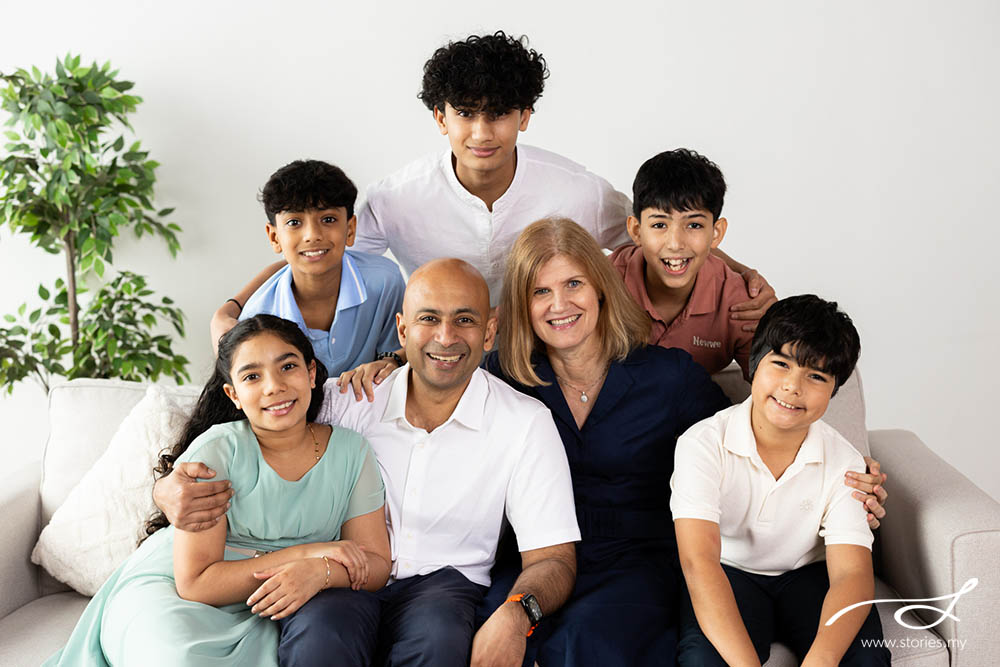 6. Keep faces close and take a test shot
A simple tip that makes a big difference is encouraging people to lean in slightly towards one another. Small movements like shoulders touching or heads gently angled closer can instantly make the photo feel warmer and more connected.
Always take a quick test shot and review it. Look out for gaps, hidden faces, or anyone feeling too far away from the group. Make small adjustments instead of starting over. This is exactly how I work during professional sessions.
 A final thought
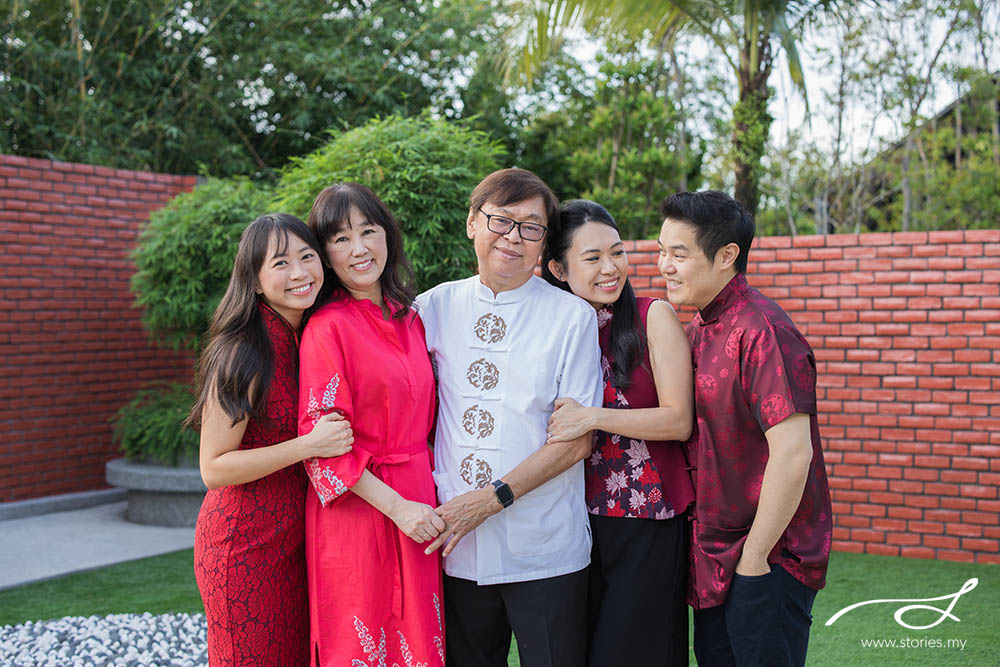
Family group photos are not easy, especially when there are many personalities involved and different dynamics to the relationships. Don’t aim for perfection. Aim for connection. When people feel comfortable, seen, and close to one another, the photo will naturally feel right.
And if arranging everyone still feels overwhelming, that’s completely normal. This is where having a professional family photographer helps. My role is not just to take photos but to guide families gently through the process so they can relax and enjoy the moment together.