fbpx Skip to main content
Category

For Photographers

Chinese New Year Through Our Eyes: The Traditions That Shaped Us

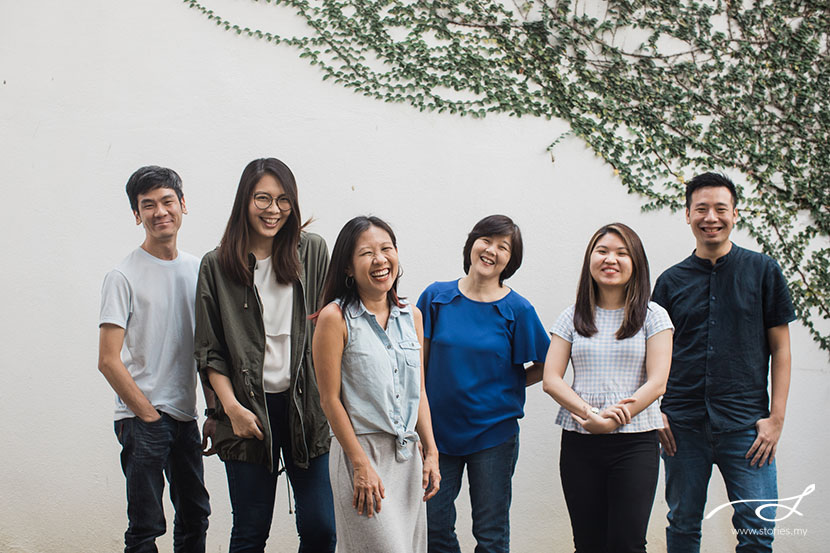
Chinese New Year doesn’t ease in quietly; it bursts into our homes with laughter, movement, and noise. This season moves quickly, carrying laughter, conversations, and generations under one roof.  As a family photography team, this festive season holds a special place in our hearts, not just professionally, but personally.

Behind every family photo we take during Chinese New Year, we bring our own memories of reunion dinners, laughter, childhood excitement, and moments that only happen once a year. This season reminds us why documenting family matters so deeply. Here’s a glimpse into some of our team members’ favourite Chinese New Year traditions and the moments that shaped how we see family today.

Grace: Creating the Scene for Togetherness

For Grace, Chinese New Year begins with intention.

“I love taking the time to set up a nice Chinese New Year backdrop for a family photo,” she shares. “It’s not just about decorations and props, but more about creating a space where people naturally gather.”

From carefully chosen red accents to thoughtful details that frame a family just right, Grace sees the backdrop as more than a visual element. It becomes a place where generations stand side by side, where some straighten their clothes, others laugh nervously, and children wiggle with excitement.

That quiet preparation mirrors what Chinese New Year is really about: making room for family to come together. Years later, when the backdrop fades into the background, what remains is the togetherness it helped capture. 
Bin Bin: Cousins, Connection, and Coming Home

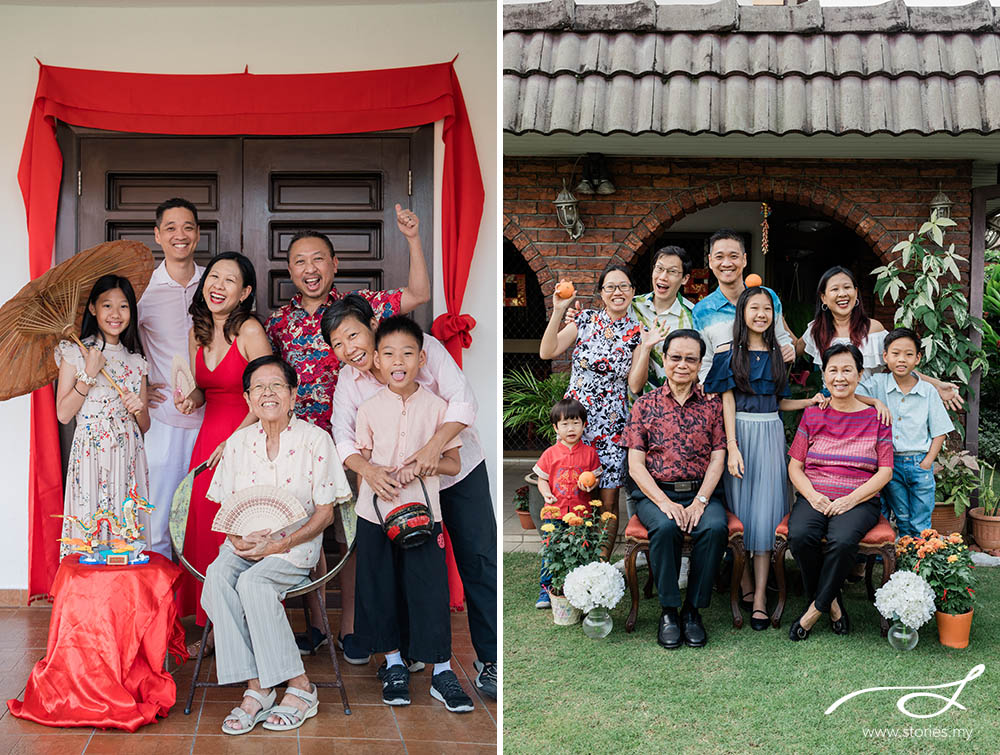
Growing up with a large extended family, Bin Bin’s Chinese New Year was a blur of reunion dinners, greetings, and rooms filled to the brim. “I’ve been blessed with great memories of playing with my cousins when I was young,” she says. “Because we live across multiple states, Chinese New Year is one of the few occasions when everyone makes the effort to come home.”

Those reunions were about the continuity of traditions. Games that lasted all afternoon, shared snacks, and late-night conversations created bonds that lasted well beyond the festive season. What makes these memories even more meaningful now is seeing the next generation continue the tradition. “I’m grateful that I’ve maintained close relationships with my cousins,” Bin Bin adds, “and I’m so glad to see our children playing together during Chinese New Year.” 

It’s a reminder that family photos don’t just capture people at that point in time, they capture relationships that stretch across years and generations.

Leong Wai: The Universal Joy of Angpaus

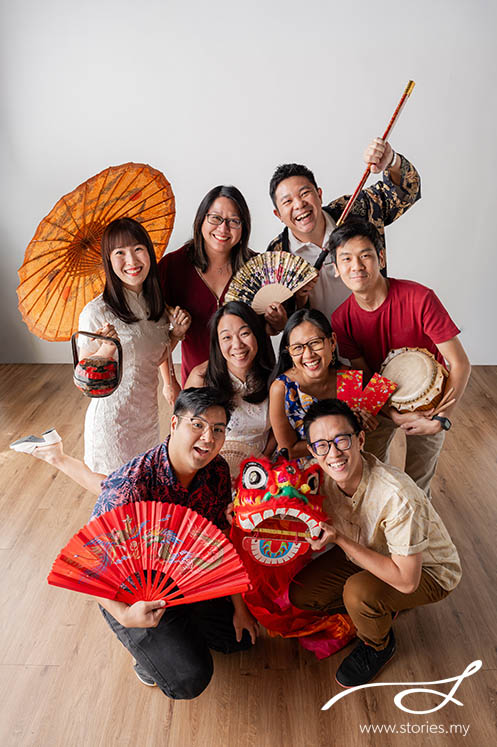
Some traditions need no explanation. “Receiving angpaus,” Leong Wai says with a smile. The joy of crisp red packets, the anticipation of opening them, and the playful comparisons between cousins are universal experiences for many of us. But beyond the money, angpaus represent blessings, love, and the hopes elders place on the next generation. In photos, angpaus often appear as small details, clutched in tiny hands or slightly peeking out of the pocket, but they tell a larger story of care and continuity.

Abel: A Table of Traditions

For Abel, Chinese New Year is remembered through the rituals at the reunion dinner table. His mom would always cook arrowhead with Chinese sausage, a dish that only appeared during the festive season. There is also one rule that remains the same : the entire reunion dinner has to be eaten with chopsticks, no forks or spoons allowed. Looking back, those small rules are what made Chinese New Year feel different from every other meal of the year.

Ian: The Unexpected Joy of Pizza

For Ian, Chinese New Year was more than the traditional Chinese dishes. “When I was younger, I rarely had pizza,” he laughs. “So I actually looked forward to eating pizza during Chinese New Year, along with other non-Chinese dishes like mutton and satay.” It’s a small memory, but a powerful one. It speaks to how Chinese New Year isn’t rigid but it evolves with each family. What mattered wasn’t what was on the table, but the feeling of abundance, excitement, and permission to indulge in something special. Those unexpected traditions often become the ones we remember most. And when captured in photos, they tell future generations something important: family traditions don’t have to look a certain way to be meaningful. 

Jon: Fireworks, Freedom, and Childhood Wonder

Jon’s Chinese New Year memories sparkle, yes, quite literally. “My parents would always buy me fireworks from a cake shop,” he recalls. “I’d carry a plastic bag full of fireworks to my grandma’s house and have the time of my life with my cousins.” The excitement of holding that bag, the smell of gunpowder, the thrill of lighting fireworks together, the definition of pure childhood joy. Those moments weren’t planned or posed, but they shaped his fondest memories of the festive season. Today, those carefree moments live on through old photos and stories retold at family gatherings. It’s a reminder that what feels like chaos at the time often becomes the most treasured memory later.

Why These Stories Matter

Chinese New Year isn’t just one day (or fifteen days). It’s a collection of precious moments, some loud, some quiet. These moments shape how we remember family. These personal traditions are why we believe so deeply in photographing families during this season. Because one day, today’s children will talk about their own favourite memories. And photos will help them remember not just how it looked, but how it felt. This Chinese New Year, whether it’s your first reunion in years or another familiar gathering, we’re here to help you preserve these moments, especially when these are the ones that come home only once a year.
Reflections of the Year 2020 by Grace

I never expected 2020 to turn out the way it did. The Wawasan 2020 vision I had as a teenager was quite different to what I realised this year, but if there’s one word to describe the year that went passed, it is gratefulness. We launch into 2021, going into our 13th year of business. We’re going to be ‘teenagers’…no longer the child we were when we first started out in 2008.

Continue Reading

A Photography Workshop on Storytelling & Branding with WPM


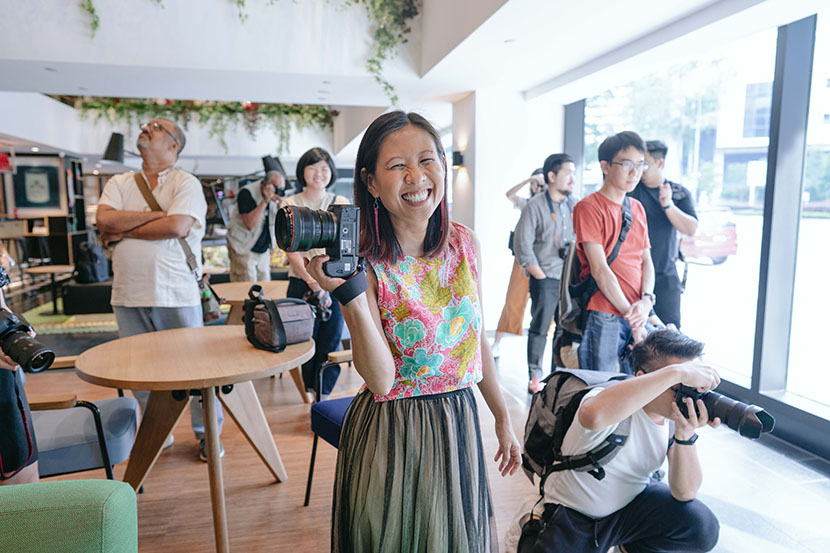
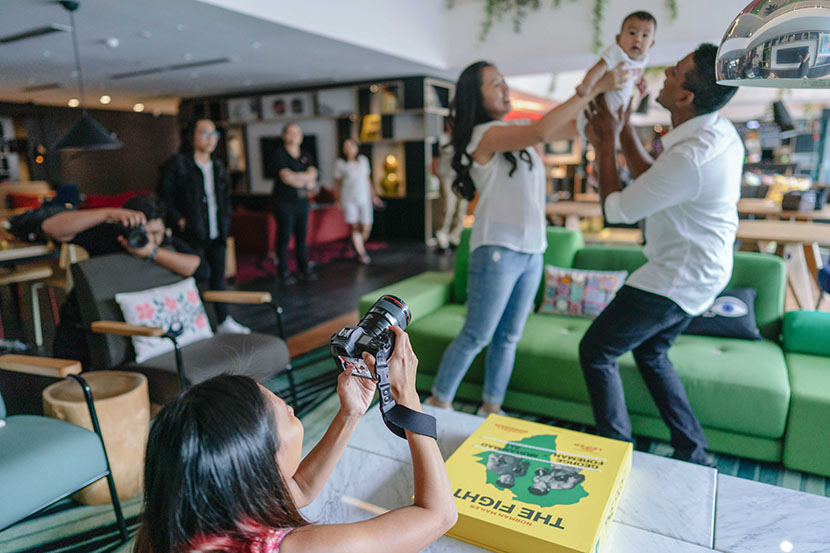
I was recently invited to conduct a session on Photography: The Art Storytelling & Branding at Women Photographers Malaysia’s first-ever workshop! It was hosted at Citizen M Hotel in Kuala Lumpur, gathering about 20 of us from different backgrounds – the organisers, participants, our talents, and fellow photographers – all who shared one common interest: a love for this art.

It felt good to be connected with these photographers – some were already full time photographers, others were considering on making it as their career, or were hobbyists and even students who want to learn more.

When I was planning the workshop, I knew I wanted to run it in a way that was more than just a theoretical session. For me, it was important that participants could go back with real thoughts that would challenge them where they are, at whatever stage they might be at.

So I was really glad when many came up to me after the workshop to tell me what they experienced and learned in just three hours. Here are some other feedback message I received:

Continue Reading

5 Business Lessons as a Creative Entrepreneur

At the beginning of May this year, I felt that I needed to take a short personal sabbatical from running my business that has been in operations for 11 years now. I thought I could use the extra time to learn new skills, spend time with my kids, catch up with people but in reality, I realized that I could never really disconnect from my work.

In the middle of May, I attended the National Achievers Congress and that event made me think about how I have been running my business all these years. As a result of conversations with so many other friends, family and entrepreneurs, I’ve written down some of my reflections regarding business as a creative entrepreneur.

1. Self-employed vs Business owner

Even though I have staff working with me, my mindset has not moved beyond a solo self-employed entrepreneur to a business owner. A self-employed person would dabble in everything, from marketing to sales to operations… the list goes on. Basically, in Malaysia, we say, “one leg kick all”. According to this website, it has the definition of “Perhaps a direct translation of the Cantonese phrase, yat kiok tek, it describes a job or situation where one has to do everything, and not usually by choice.” If everything in your business depends on you, you’re self-employed. To me, this is a sure-fire way to be trapped for a long time. To transition to a business owner, I need to have scalability. Part of this involves automations.

Part of my dream would be to have financial freedom within the next 5-10 years so that I can be free to make choices about how I would like to spend my time daily. Over the years, I’ve automated some of my processes, so that’s great, but I need to be more intentional about thinking how to work with amazing individuals so that they can take the business to a different level. Which brings me to another point.

2. Get the right person on the bus

I heard about this principle through Cavemen, a group of amazingly talented business coaches who dress in crazy outfits and run life changing programs. The principle runs around the idea that you need the right people on your bus (the business) that are going in the right direction as you and on the right seats. Unfortunately, you also have to get the wrong people off. As I discovered, some people are extremely talented, but they are not doing the right job. Some people, over time, decide that their direction is no longer the same direction as yours, and that’s ok because people change and they move on. But the most challenging and difficult of it all would be to identify people who are wrong for the business and politely showing them the door (no kicking involved!). Get the right people doing the right job and the bus will move efficiently.

3. Communicate your ‘why’

So how do you get the right people on board? You need to communicate your why – why are you doing what you do? Why should this person join alongside you in this journey? Learning to communicate this why took me years to perfect. I only wrote my vision and mission statement last year (after 10 years of running my business). As I did more self-reflection, the why became clearer and clearer. But sometimes I fail to share my thought process with the team. So I am running this business and I think everyone is running behind me, but in reality, they might be clueless.

4. Stop being a perfectionist and too ‘creative’

Years ago, I couldn’t bear the thought of hiring a digital artist to edit my photos because nobody could do it as well as I could (or so I thought). In my mind, I had to control the entire creative process and my way was really the ‘best’. But my practical husband told me that I had to change this mindset. After I released control, I realized that other people can do a better job and that I now had time to do other things! (look at point number 1 above). Naturally, I had to think of ways to ensure quality is maintained through the years even with different people on the team. When I opened my mind, I found that other people’s ideas added so much value to the company.

5. Always learn. Always innovate.

10 years ago, I could count the number of female photographers in one hand. Things change. Instagram became popular. The students I taught in college when I was a freelance lecturer suddenly grew up and became my new competitors. I could choose to be bitter or choose to collaborate. I could choose to moan about the economic situation and how it affects my business badly, or choose to think of ways to innovate. One of my values in life is being hardworking. It probably came from my mum who sold did direct sales of Pyrex during the day and baked cookies in the wee hours of the morning so that she could earn enough for our future. But working hard needs to be coupled with working smart. Keep moving. Keep learning. Keep implementing fresh ideas.

It’s still a journey. There’s so much to learn. But journalling my lessons down this way helps keep me on track. Onwards, to a better and greater future!

Tips for Posing Families

Posing is more than just placing people in a specific position and having them hold still. It is about using your skill (and a few tricks) to help your subjects look their best in your photos. Here are 3 simple tips that will help you get better, natural and more authentic family portraits.

  1. Composition makes a difference
  2. Show emotional closeness
  3. Let children play

Watch the video for more information!