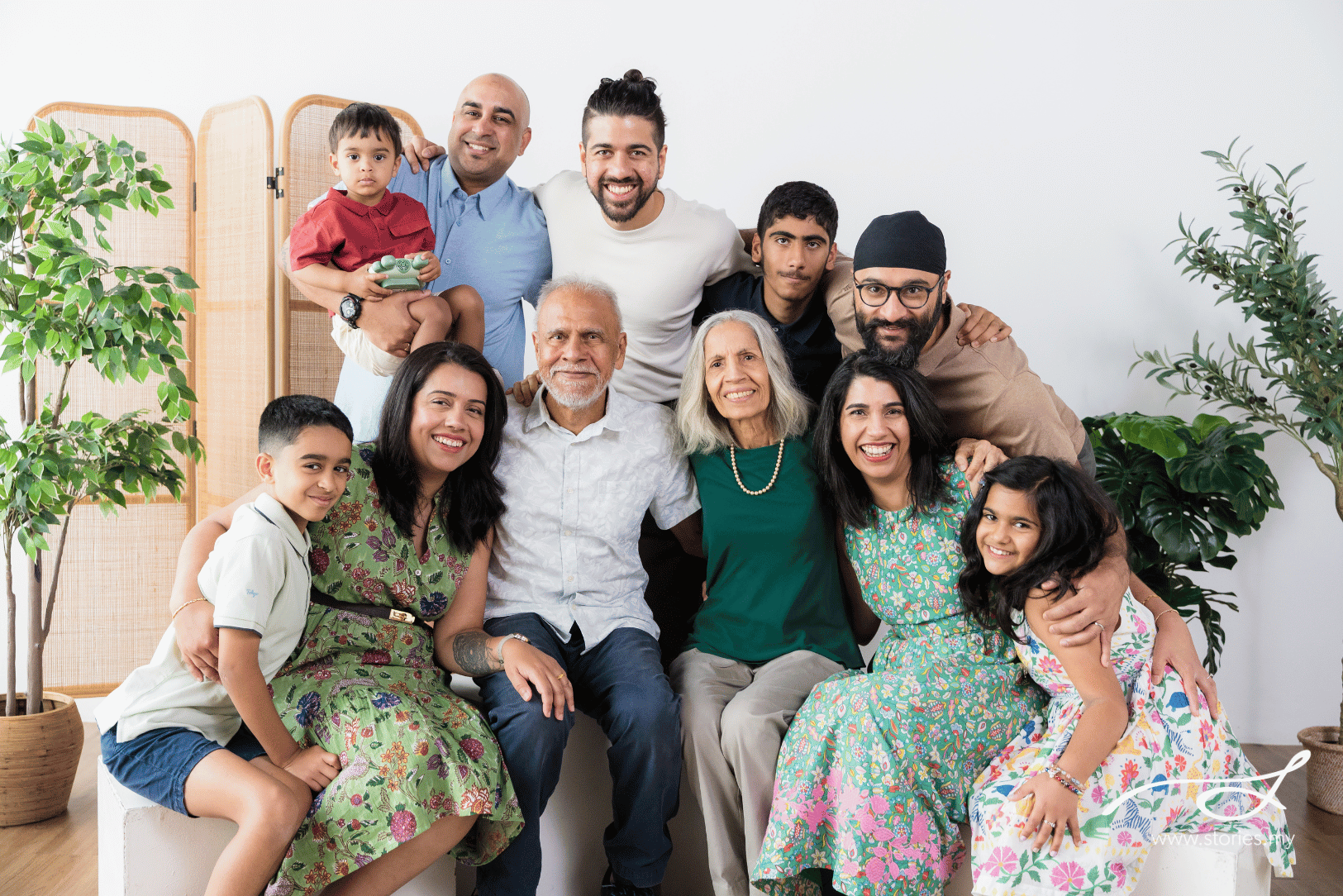
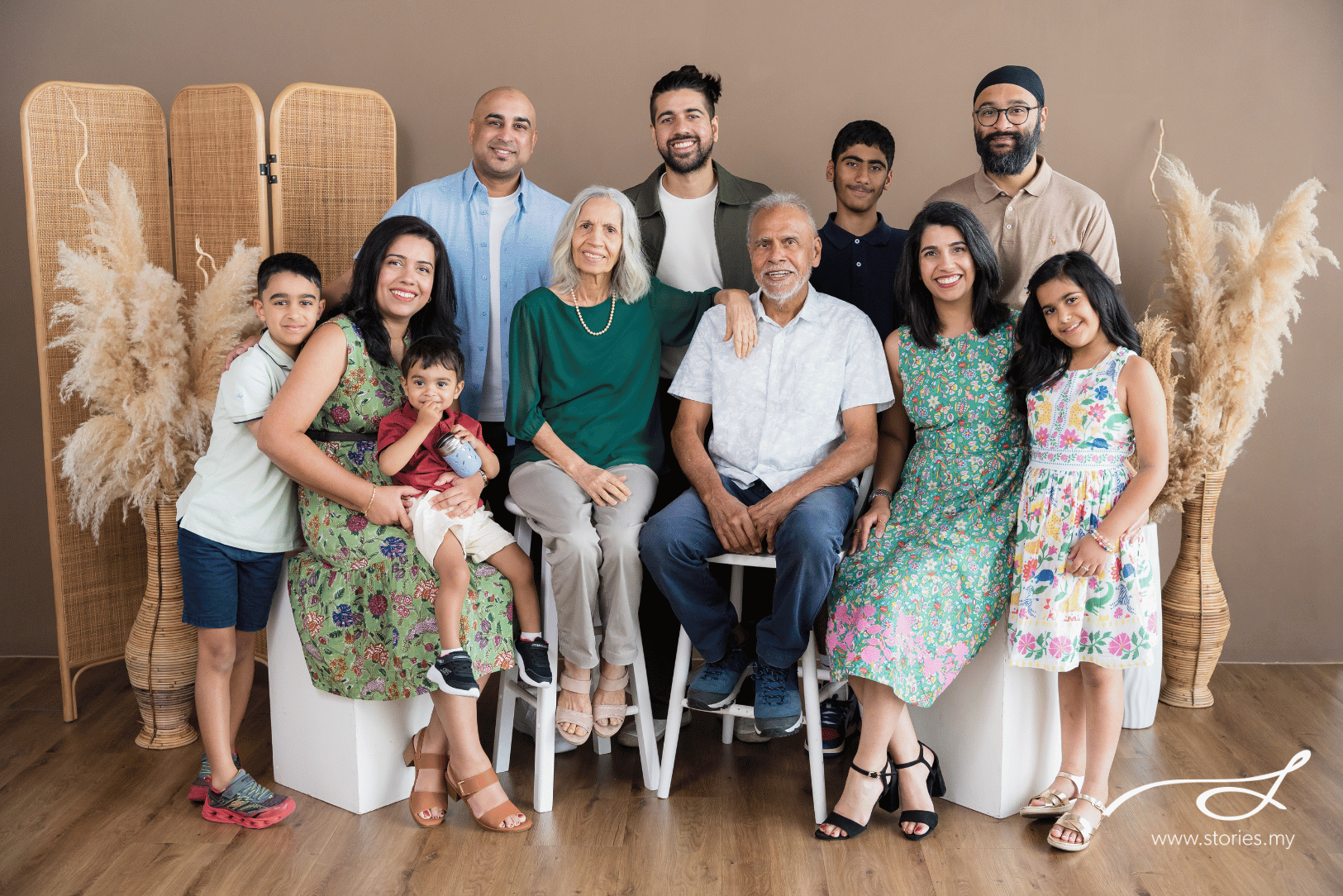
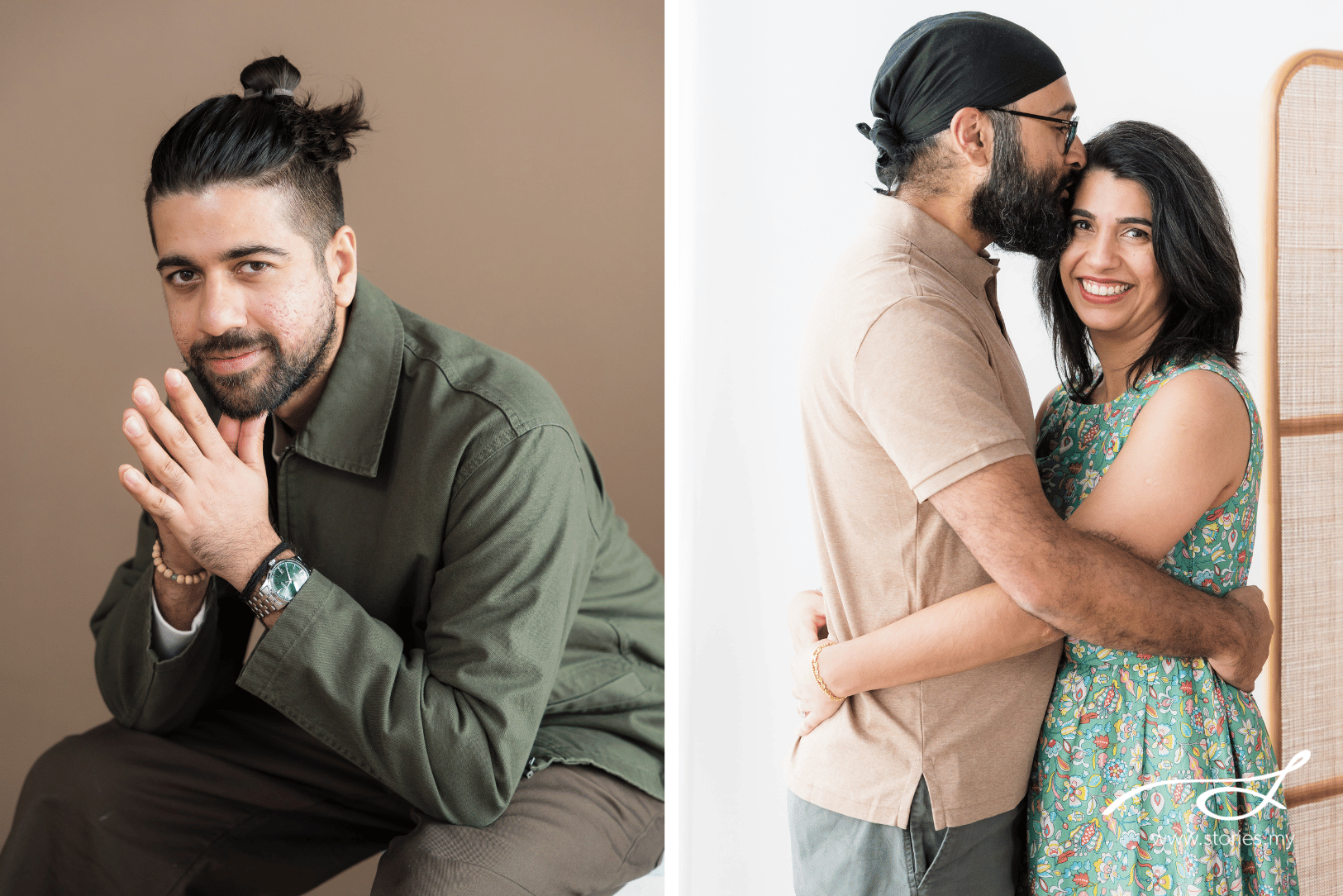
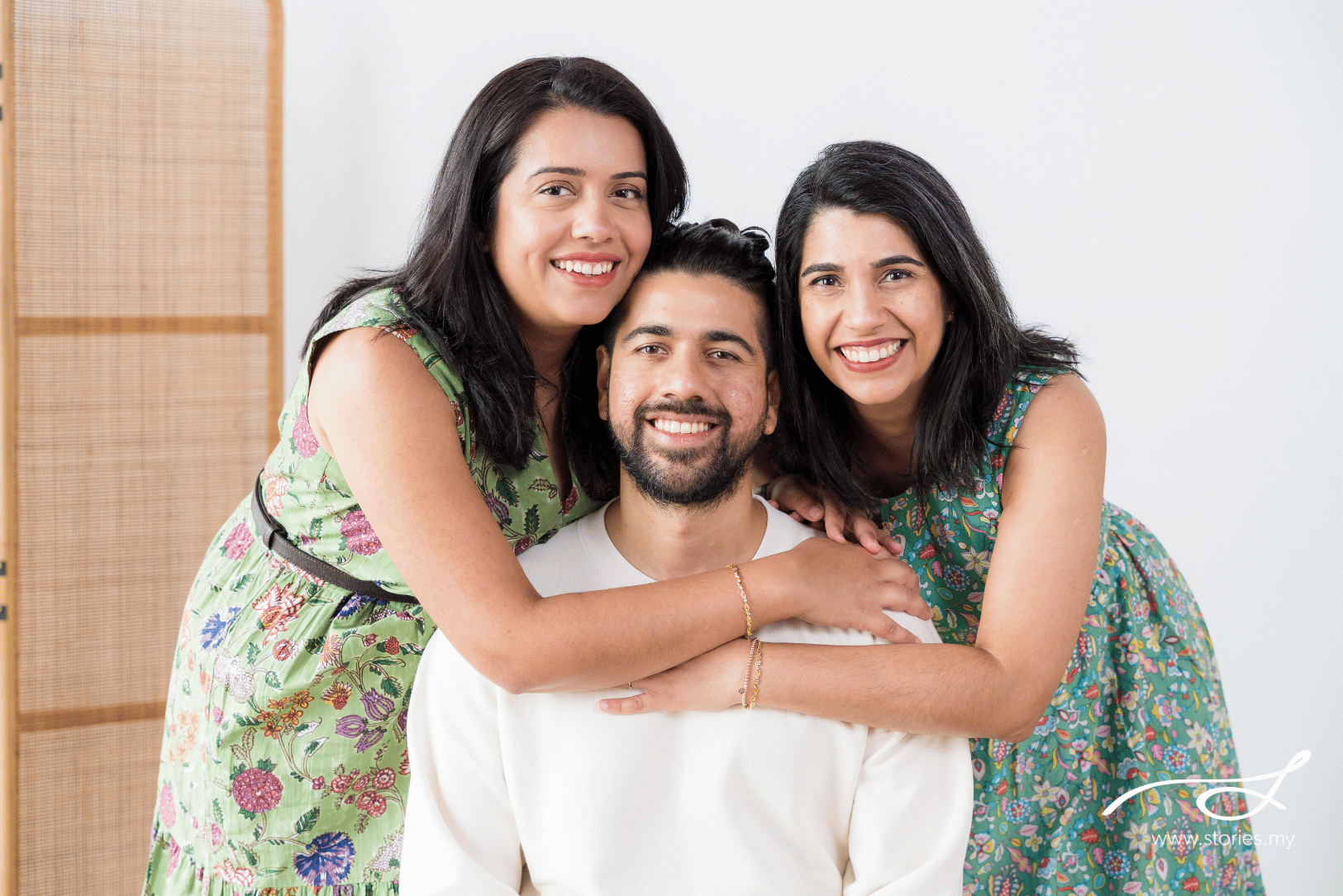
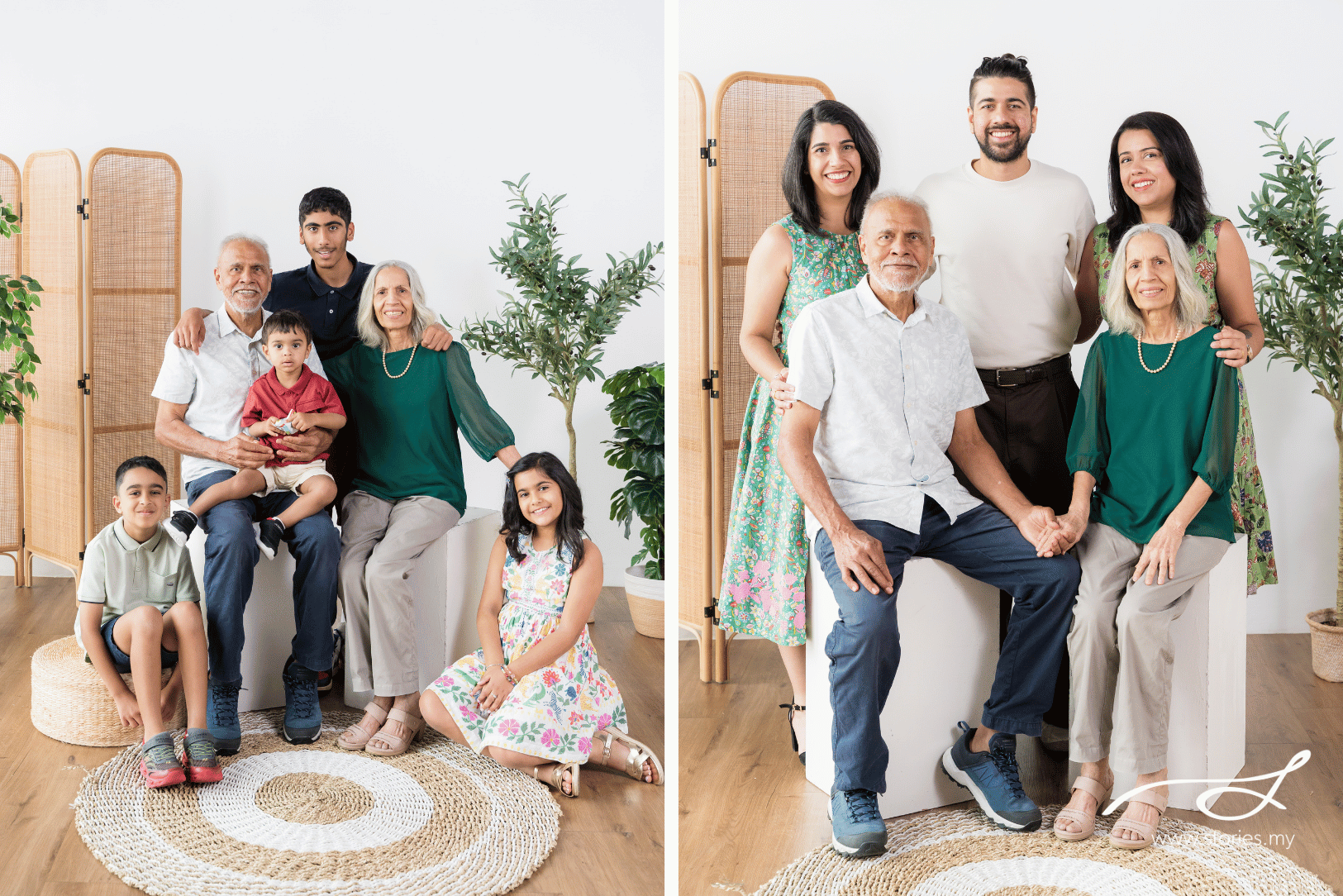
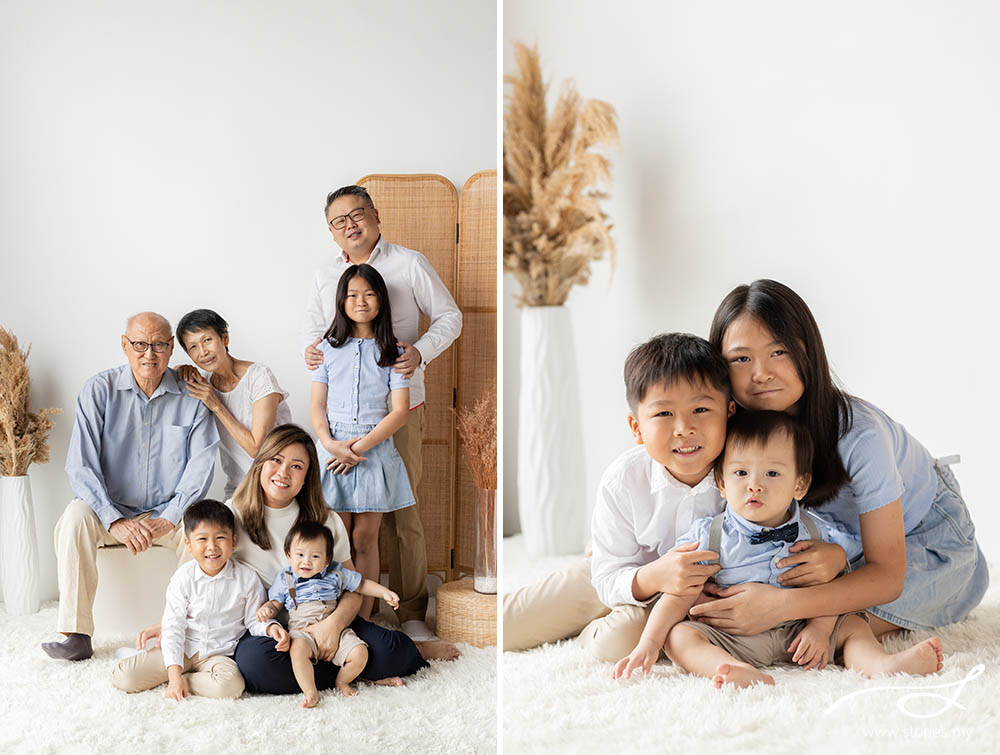
We had the honour of hosting Parveen and their family for a large family photoshoot in our studio. With 11 family members, it was a lovely opportunity to bring everyone together and capture memories across three generations. Our studio is cosy enough for small groups and spacious enough to fit slightly larger ones like these.
A large family photoshoot is usually done within a 2-hour session, which gives us enough time to capture different combinations of the family: everyone together, grandparents with their grandchildren, individual family units, and even solo portraits if time permits. Contact us to schedule your family session at our studio, home, or any outdoor locations. Anytime is a great time for portraits!
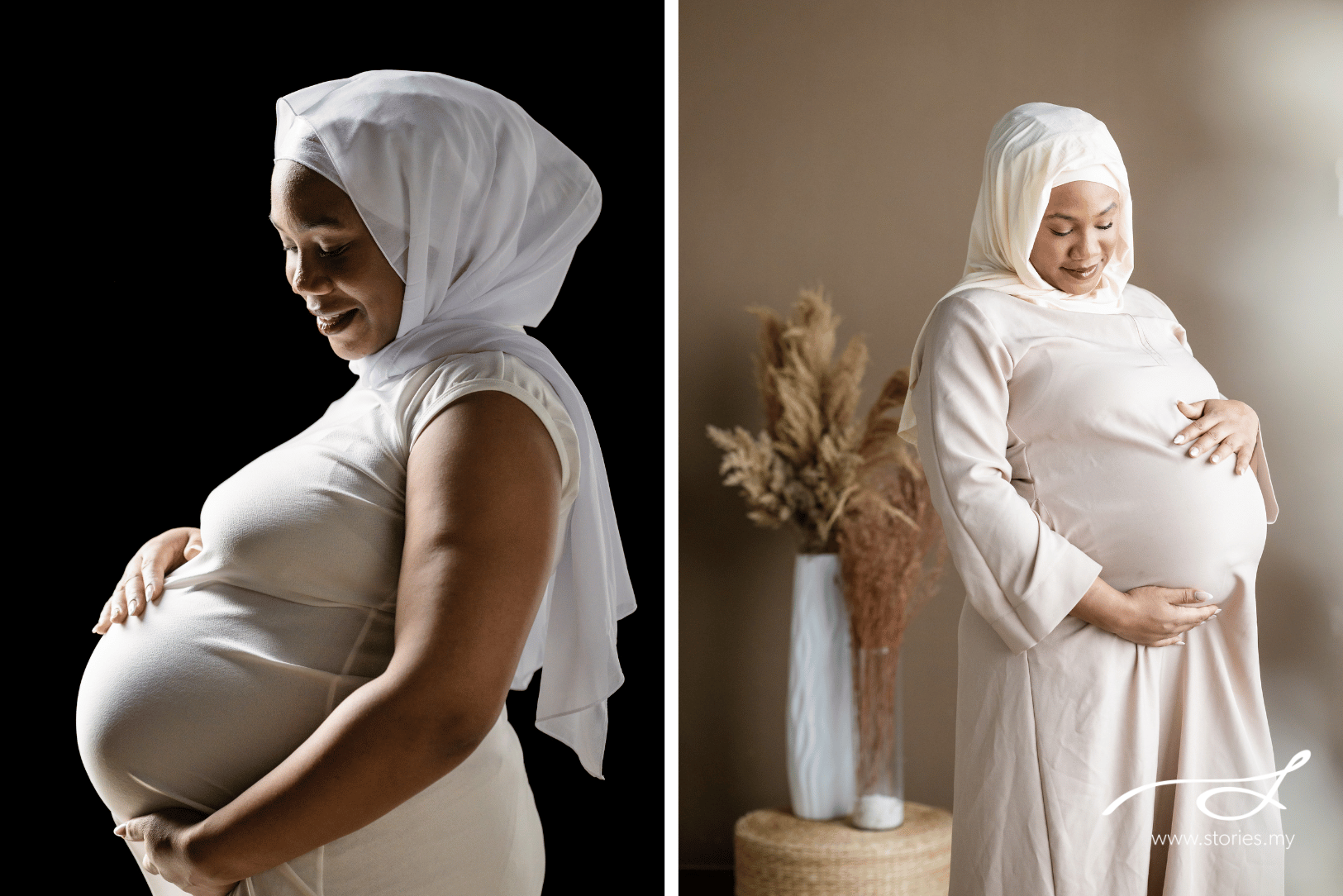
The minute the mother finds out she’s pregnant, her relationship with her child begins. The baby hasn’t arrived, but they’re already being imagined, talked about, and loved. As the belly grows, it becomes a visible sign of pregnancy. As the months go by, it then becomes a marker of how close a mother is to meeting their baby.
There’s anticipation, excitement, and ever-growing love for someone she hasn’t even met yet. So much so that she should plan a maternity shoot with her baby still in her belly.
Many may start to wonder, “Why have a whole photoshoot of yourself and your belly? Wouldn’t it be better if the mother waited until her baby was born? Wouldn’t that save the mother money?” Well, we at Stories don’t have an answer to that, but we can help you understand why mothers take photos of their bellies.
It’s more than just a baby bump
The first answer is simple: maternity photos aren’t simply about documenting the size of a belly but about capturing a deeply personal moment.
Pregnancy is filled with moments that may seem ordinary at first, but over time, they become moments mothers want documented for later reminiscing. Think of it as the first chapter of the relationship between the mother and baby. It’s like an introduction to the characters and to how they intertwine.
A photograph gives mothers a way to hold onto those moments. Yes, the belly itself is temporary. It grows for several months, and eventually, the baby arrives, and everything changes. But a photograph can preserve the version of a mother who was still waiting — still carrying her baby, imagining them, and preparing to meet them.
Perhaps that’s part of why maternity photography is in such demand — it can feel so intimate — just a mother and her baby in her belly.
A commenter on the Chinese platform Zhihu shares, “We [husband and I] took lots of maternity photos ourselves on our balcony. Of course, there were plenty of pictures showing off my belly — it came from the same feeling as wanting to show off and share pictures of the baby…it really felt so amazing [that] I had a baby growing inside me, and I was such a happy mother. That was genuinely how I felt at the time. I was basically this little pregnant woman glowing with joy!”
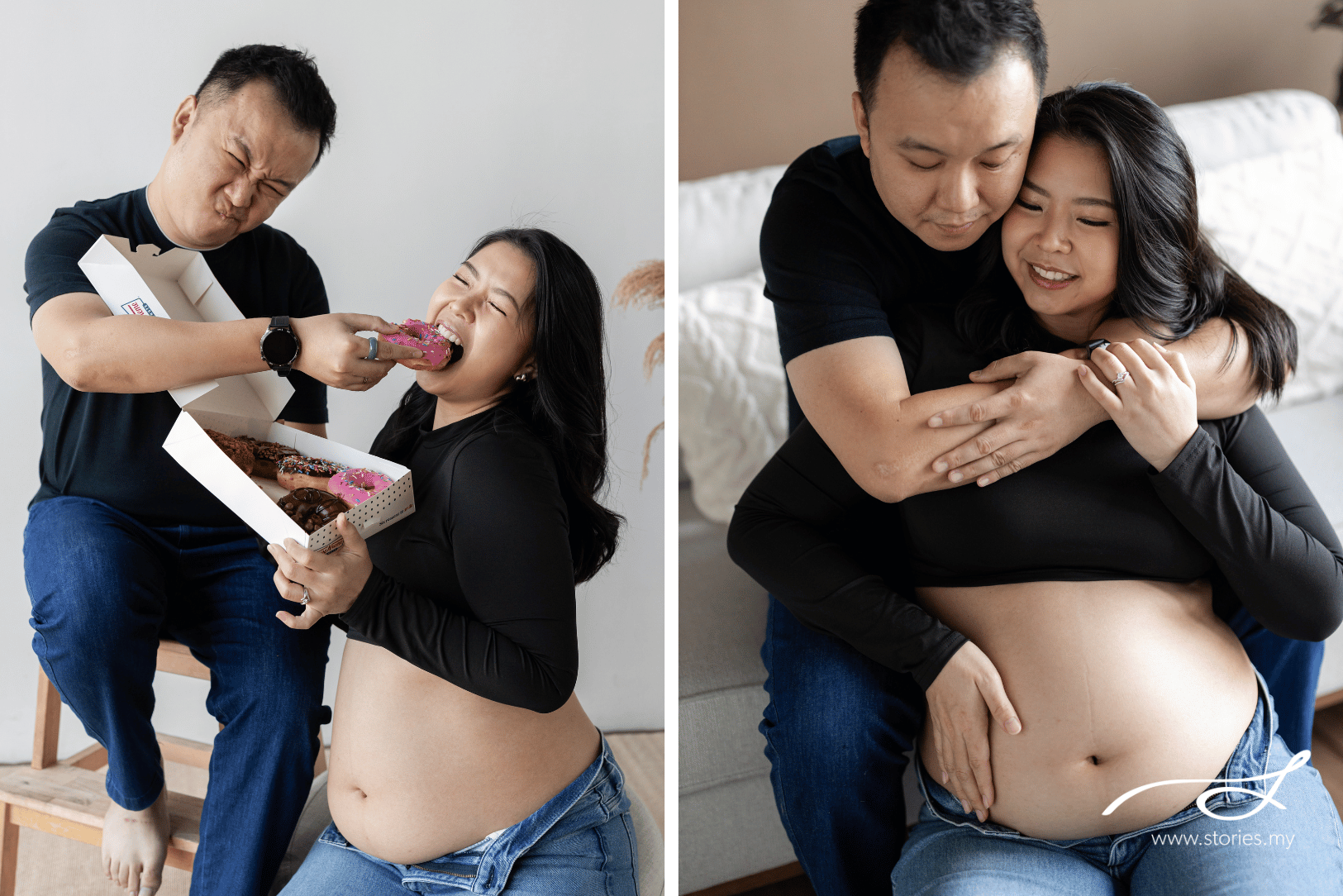
The second answer: it’s a way of celebrating the mother.
Look at a photograph of a mother smiling, one hand resting gently on her belly; you might see nothing but joy. What the photograph doesn’t show are the months that came before it — the morning sickness, the back pain, the swollen ankles, the foods she had to give up, the restless nights, and countless uncomfortable moments that came with carrying a baby.
Yes, pregnancy can be beautiful, but it isn’t always easy.
Behind that smile is a mother whose body has been changing, stretching, and adapting to make room for a new life. She spent months putting someone else’s needs before her own before they even arrived.
That is worth remembering.
But is a maternity photoshoot worth the investment?
Of course, there’s a question that many would ask: Is a maternity photoshoot worth paying for? Especially when the mother will be hiring a professional photographer again to photograph her baby later on?
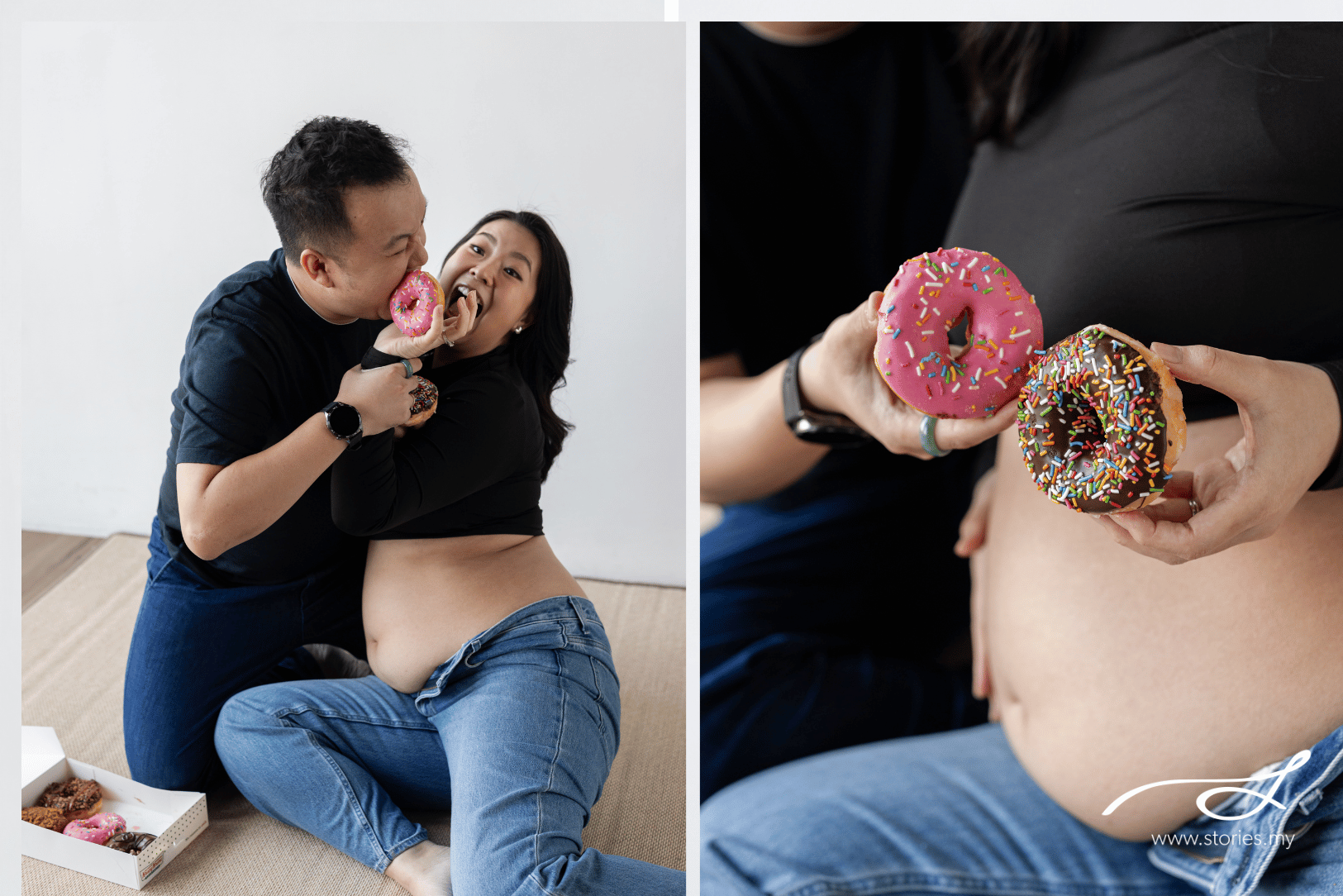
A professional photoshoot is a luxury, especially when a phone can simply capture the baby bump for nothing. But professional photography offers something different: allowing mothers to step away from documenting themselves and simply experience it.
Professional photoshoots are intentional — lighting, backgrounds, composition, and details. They can create images that reflect the mother’s personality and beauty. And while it may seem like maternity and newborn photo shoots document the same journey, they capture two completely different moments.
At the end of the day, whether a professional maternity photoshoot is worth the investment depends on family and personal values. For some mothers, it’s about celebrating the changes their bodies go through; for others, it’s about preserving a special chapter of their life before everything changes.
Whatever your reason, there’s no right or wrong way to capture this season. What matters is having photographs that feel true to you and your family.
If you’re still unsure about taking the next step, reach out to us. We’re always happy to chat, answer your questions, and help you plan a maternity photoshoot that feels comfortable, meaningful, and right for you and your family.
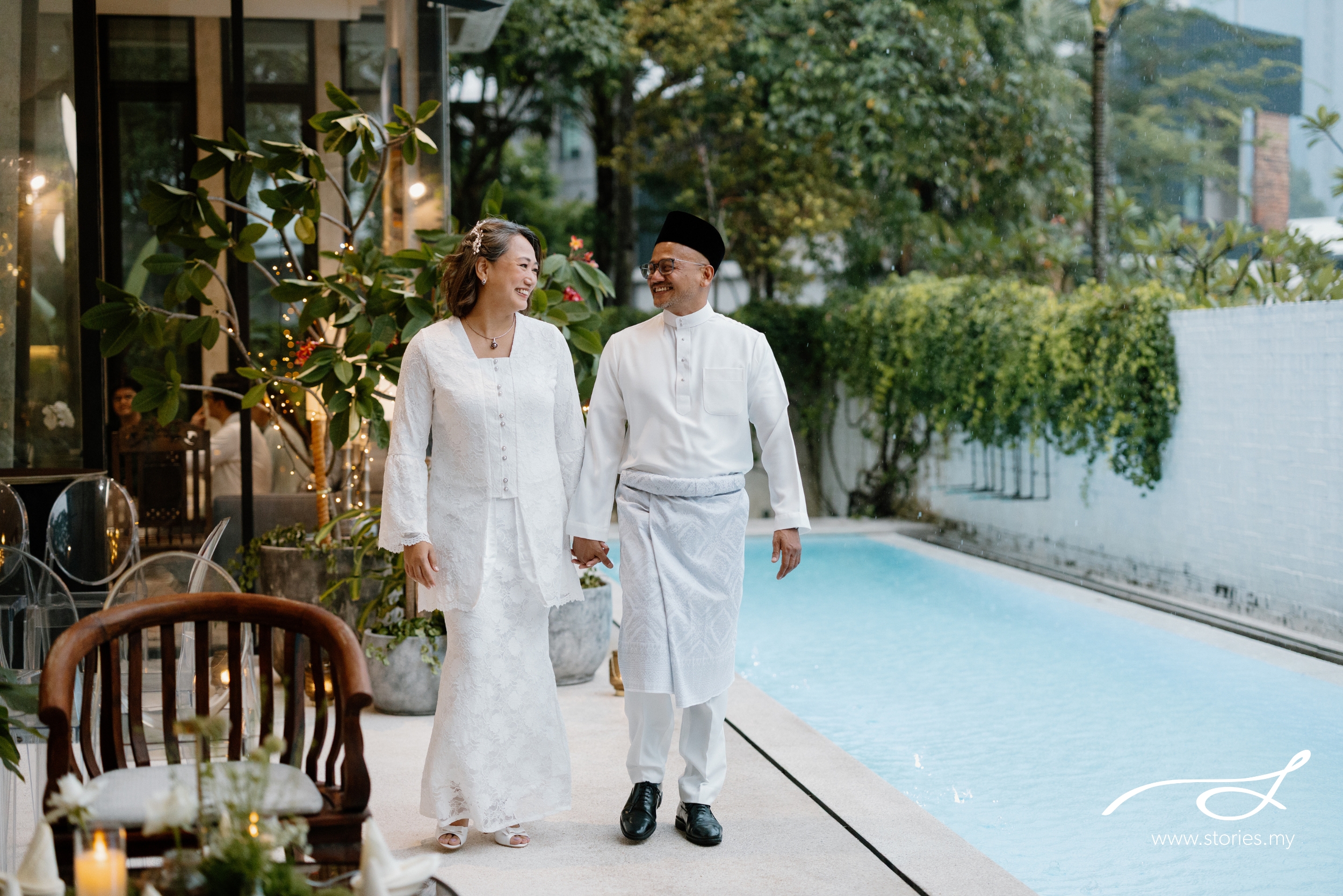
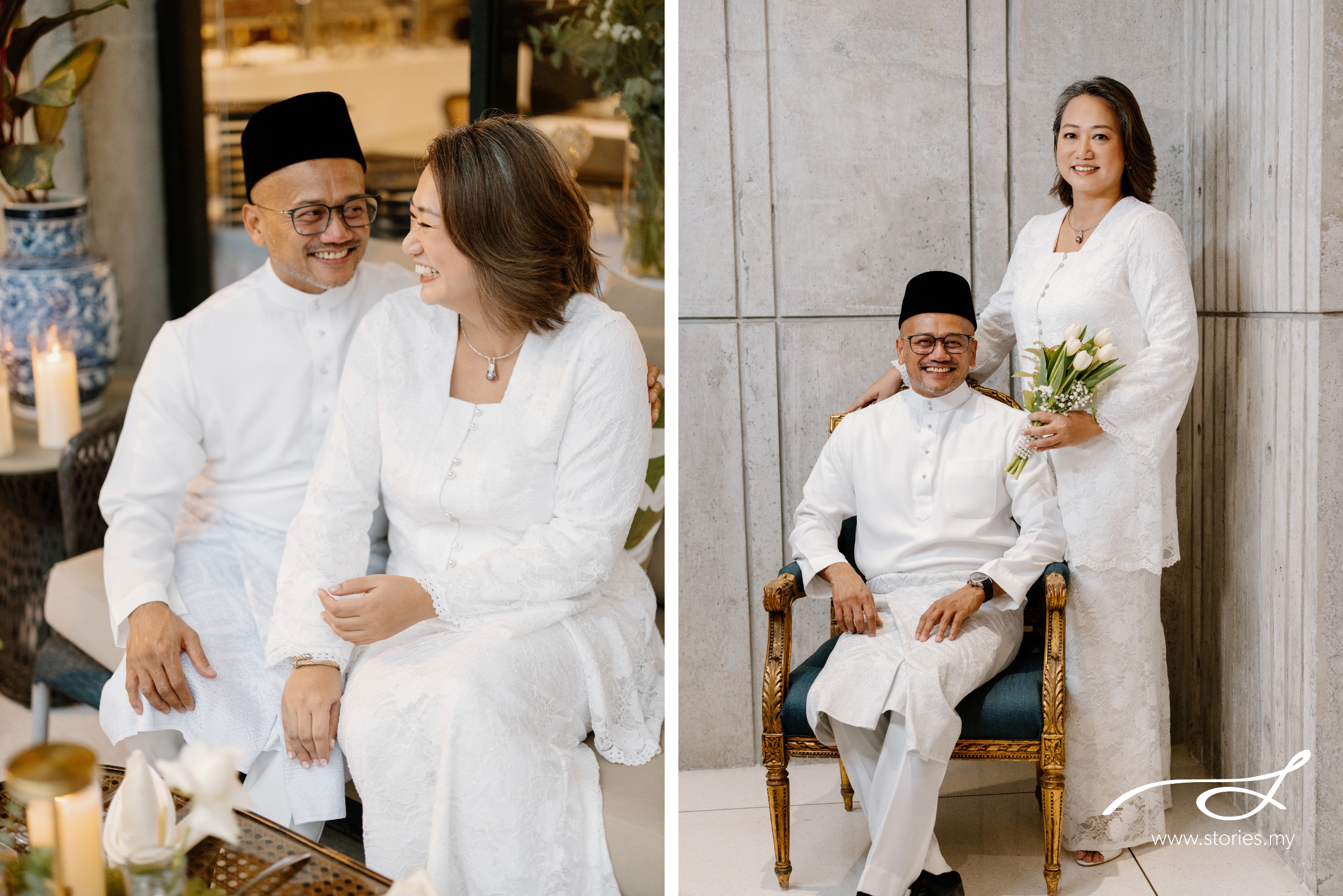
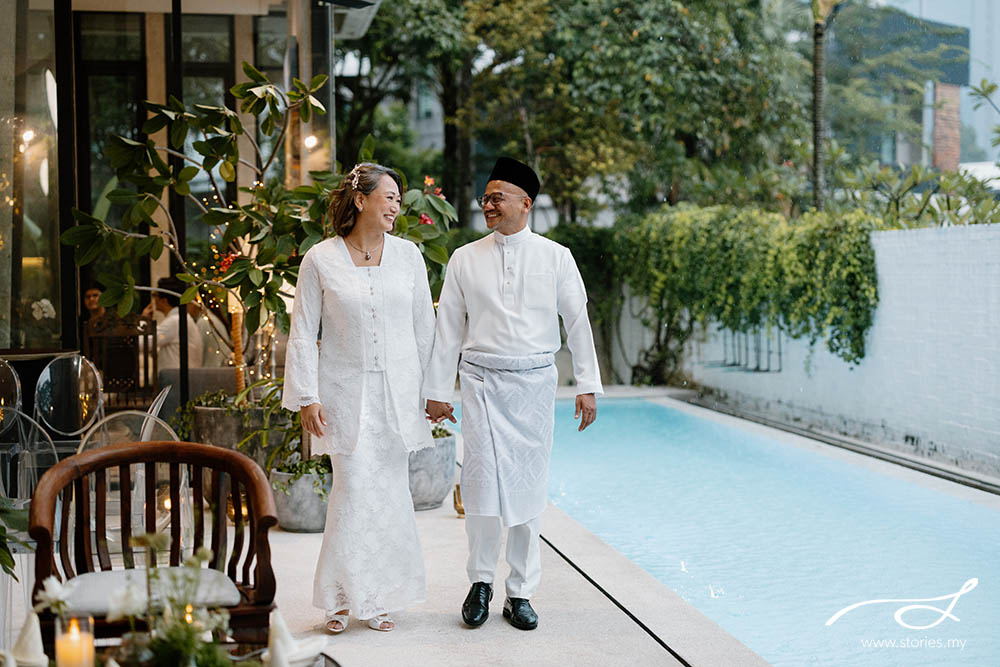
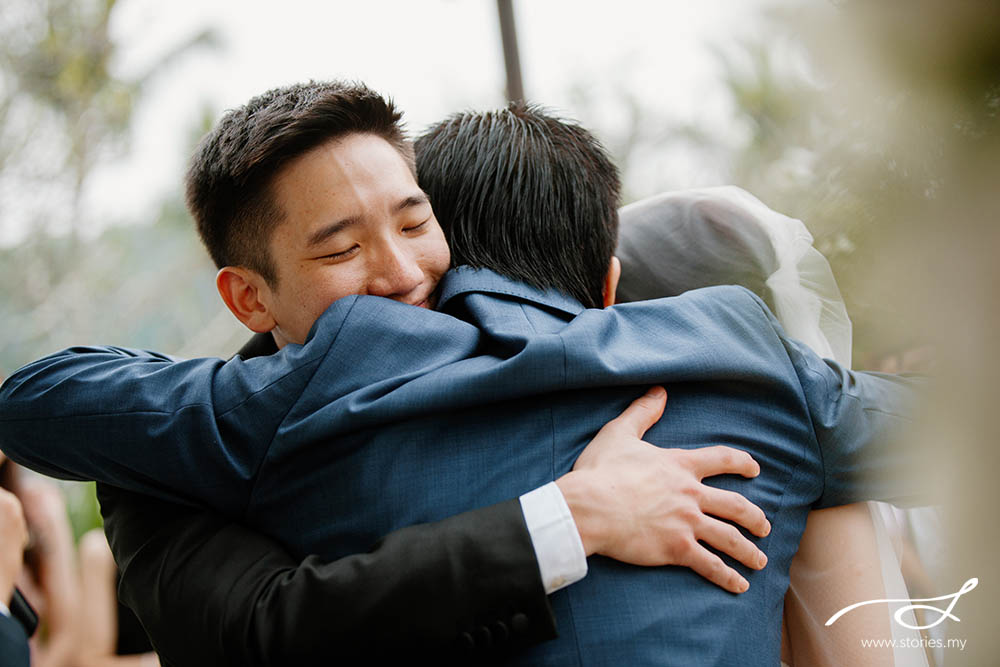
I first met Azran Osman-Rani at an ICF coaching event. He struck me immediately as down to earth, casual, approachable, the kind of person you forget is a CEO within five minutes of talking to him. Months later I had the pleasure of getting to know him better when I invited him to speak at one of the ICF events I organized for International Coaching Week. So when the invitation came to photograph his akad nikah, I felt genuinely privileged. It was not just another wedding. It was a chance to witness something quieter and more personal than the version of Azran most people know.
That quieter side runs through his whole story with Patricia. They found each other on LinkedIn, of all places, through a discussion post about branding and marketing. Their first date was at La Bodega, where they ended up talking about climate change. From there it grew into something built on shared instincts: a love for cities like San Francisco, Sydney and Seoul, and an equal pull toward nature, Nepal, Kazakhstan, Bali. Somewhere in that balance, in a convertible on the Pacific Coast Highway or on a trail in the Himalayas, two people who present very differently to the world found a rhythm that works entirely their own way.
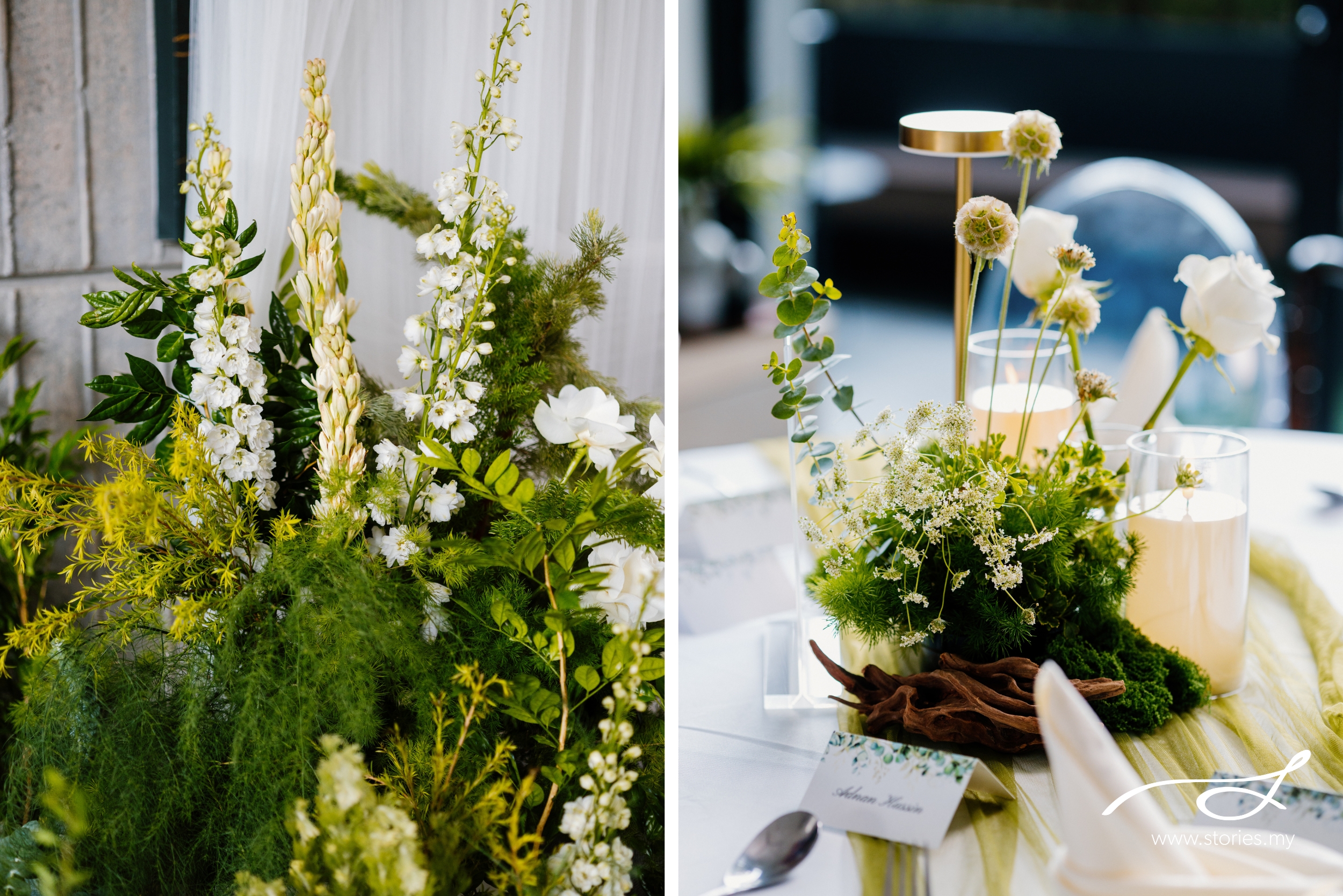
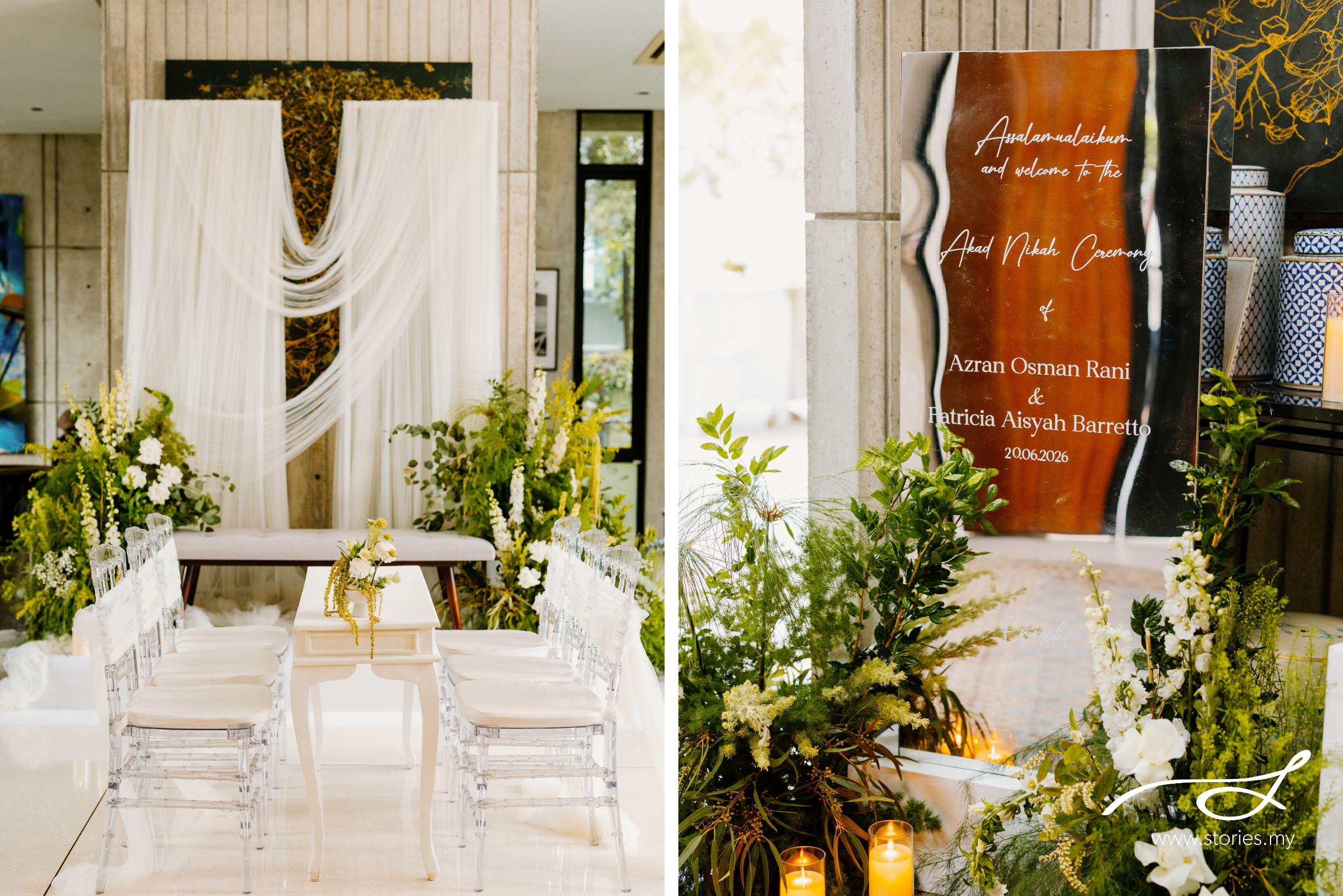
Their akad nikah reflected that same spirit. Held at the home of Azran’s sister Azleen, who poured her own vision into every detail, the setting carried a whimsical mossy green forest theme. Elegant yet informal. Classy yet relaxed. Surrounded only by family and close friends, it felt warm, personal and intimate. Thank you for giving me this privilege of being part of your special day, Azran and Patricia!
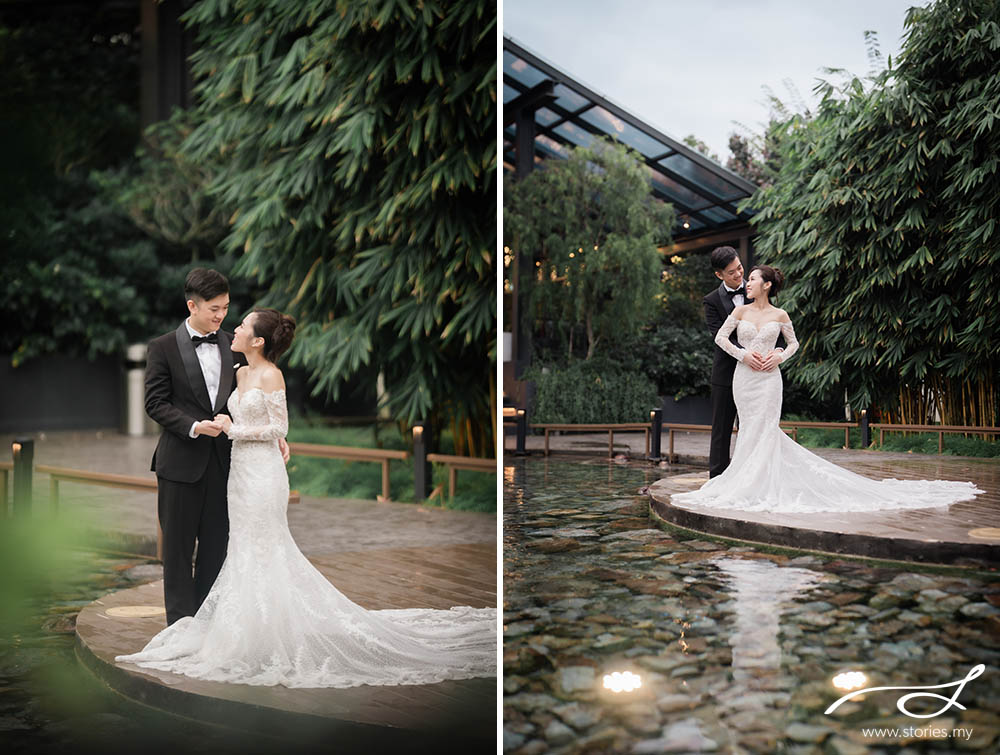
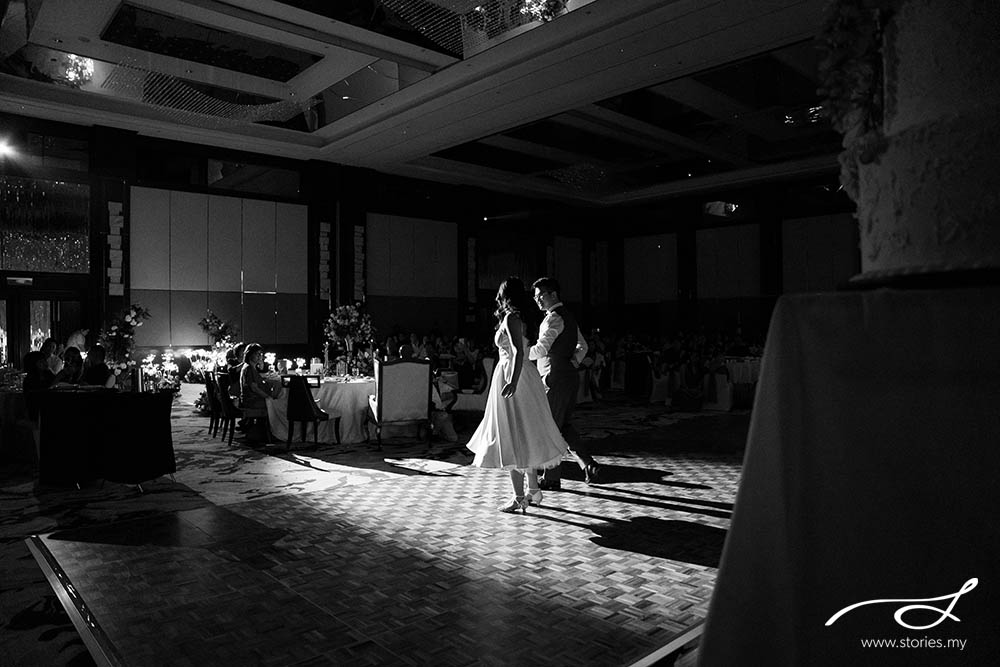
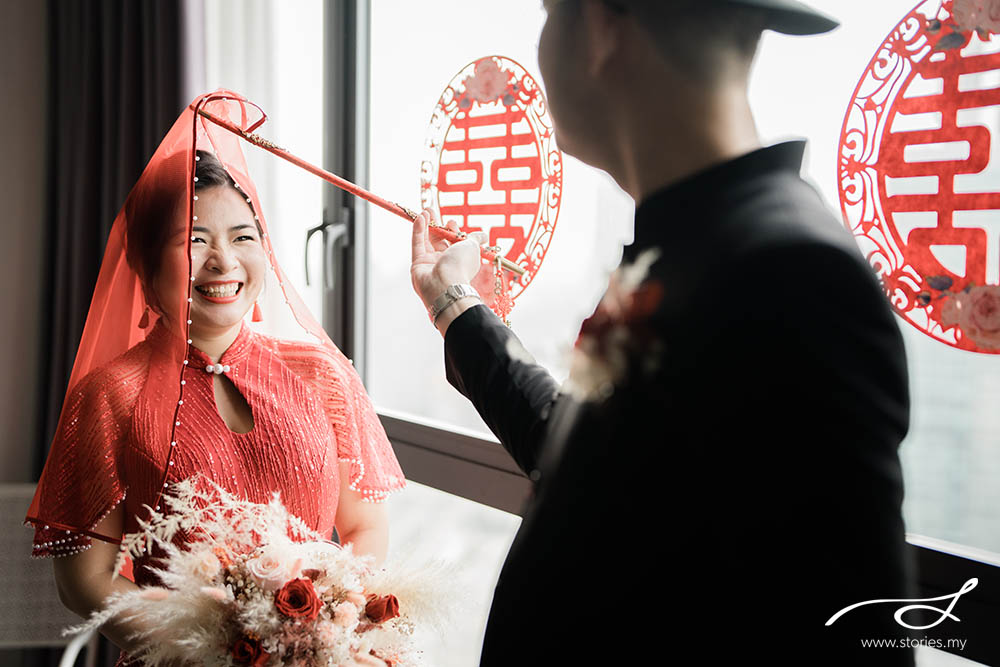
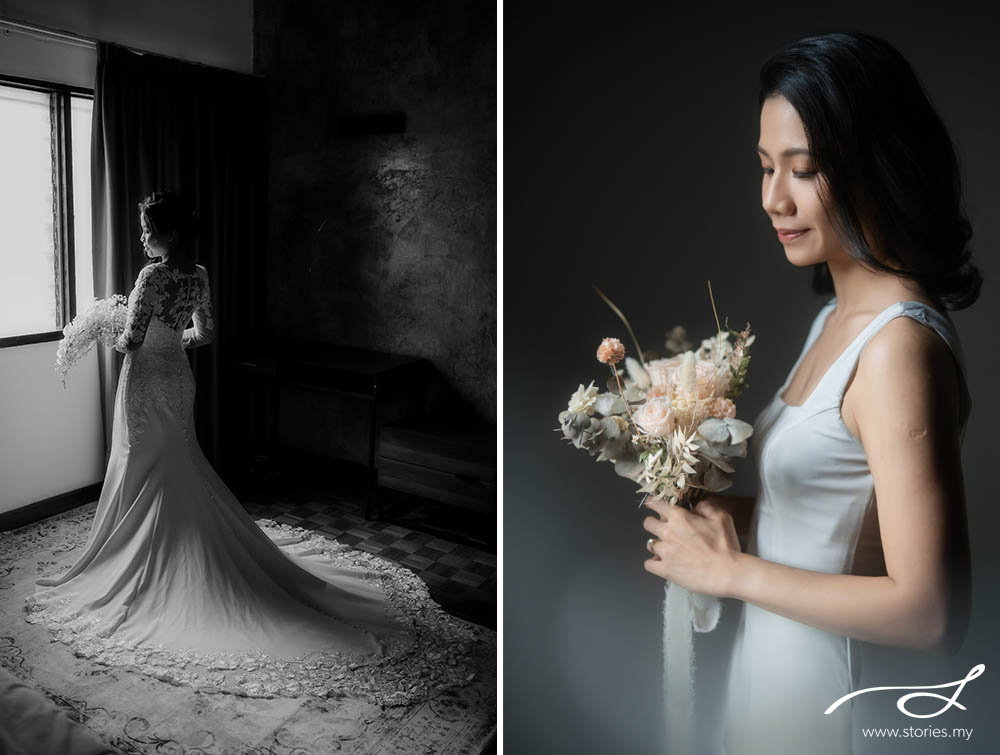
There’s something exciting yet overwhelming about choosing a wedding photographer. After all, you’re not just choosing someone to take pictures but someone who will capture the moments you’ll look back on for years to come.
With so many photographers, styles, packages, and price points to choose from, we know how difficult it can be to figure out where to start. So, before booking your wedding photographer, here are a few things worth considering. Also, doing a little research and asking the right questions can help you find someone whose work, personality, and approach are the right fit for you.
You’ll need to know what you want from your wedding photos
Before you even start looking for photographers, you will need to take some time to think about what you want your wedding photos to look and feel like.
Here are a couple of questions to ask yourself:
Do you love natural, candid photographs that capture moments as they happen?
Are you drawn to romantic, softly edited images? Editorial-style? Documentary-style? Flash-photography style? Dark-moody style? Or vintage style?
Don’t worry, you don’t need to know all the photography terminology — just save a few examples you love to help you identify your preferences and give potential photographers a better idea of your vision.
It’s also worth thinking about which moments matter most to you. For some couples, it may be the emotional moments during the ceremony. For others, it may be family portraits, getting-ready photos, reception details, or spontaneous moments.
Setting a realistic photography budget is key
Weddings are no doubt expensive. Wedding photography is an investment, so it’s helpful to establish a budget before you start reaching out to photographers.
Photography packages can vary depending on experience, hours of coverage, number of photographers, editing, albums, prints, and other services. It’s important to consider what is included and whether the photographer’s work matches your vision, rather than simply choosing the cheapest option you find. That’s not all; you may even consider the costs of hiring a photographer for your pre-wedding and whether you want to take the photos locally or abroad.
At Stories, we offer both pre-wedding and wedding photography and videography sessions. We also offer overseas photo shoots for couples who want to capture their engagement or wedding memories outside of Malaysia.
Look beyond the highlight reel, scroll further or ask for more
Now, scrolling through a photographer’s Instagram or website is the best way to get a sense of their style, but don’t stop there. Ask to see one or more complete wedding galleries. Why? Well, a full gallery will show you how the photographer handles different parts of the day. You’ll also get a better sense of whether their style is consistent throughout an entire wedding.
Ask about their approach on the day of shooting
Every photographer works differently. Some photographers are highly involved, providing plenty of direction during portraits and helping organise the session. While others take a more documentary approach, staying in the background and allowing moments to unfold naturally.
Ask how they typically work and consider which approach would suit you and your partner. If you’re nervous about being in front of the camera, that’s worth mentioning.
Don’t forget to consider their personality too
This is something couples sometimes overlook.
Think of your relationship with your photographer as a working relationship. Both of you will be around each other for much of your wedding day, often during the most emotional and hectic moments. You’d want someone you feel comfortable with.
During your consultation, pay attention to how they communicate. Do they listen to your ideas? Do they make you feel comfortable? Are they interested in understanding your plans rather than simply trying to sell you a package? The right photographer should feel like someone you can trust to be a part of your important day.
One last tip: take your time before making a decision
Always remember, you don’t have to book the first photographer whose work you love. Compare galleries, have conversations, review packages, and ask more questions. The best wedding photographer isn’t necessarily the one with the biggest following or the longest list of awards. After all, your wedding photographer isn’t simply there to take photographs but to preserve the little moments of the best day of your life.
10 Questions to ask your potential wedding photographer
Now, we’ve prepared a question bank for you to ask the wedding photographers whom you’ve narrowed down — hoping to take some weight off your shoulders.
What would you describe as your photography style?
Can we see a full wedding gallery?
How many hours of coverage do we need?
What is included in your photography packages?
How long will it take to receive our photos?
Do you have experience photographing our venue or similar weddings?
What happens if the weather changes or something goes wrong?
If we were to photograph a destination wedding, how do we proceed?
Do you help with planning the photography timelines?
What is your backup plan if you’re unable to photograph our wedding at the last minute?
Can we review the contract before booking?
So, if you’re looking for a photographer for your pre-wedding shoot or wedding day, we’d be happy to help you capture your unforgettable moments. Get in touch with us to find out more about our photography and videography services, and let’s create something you’ll love looking back on.
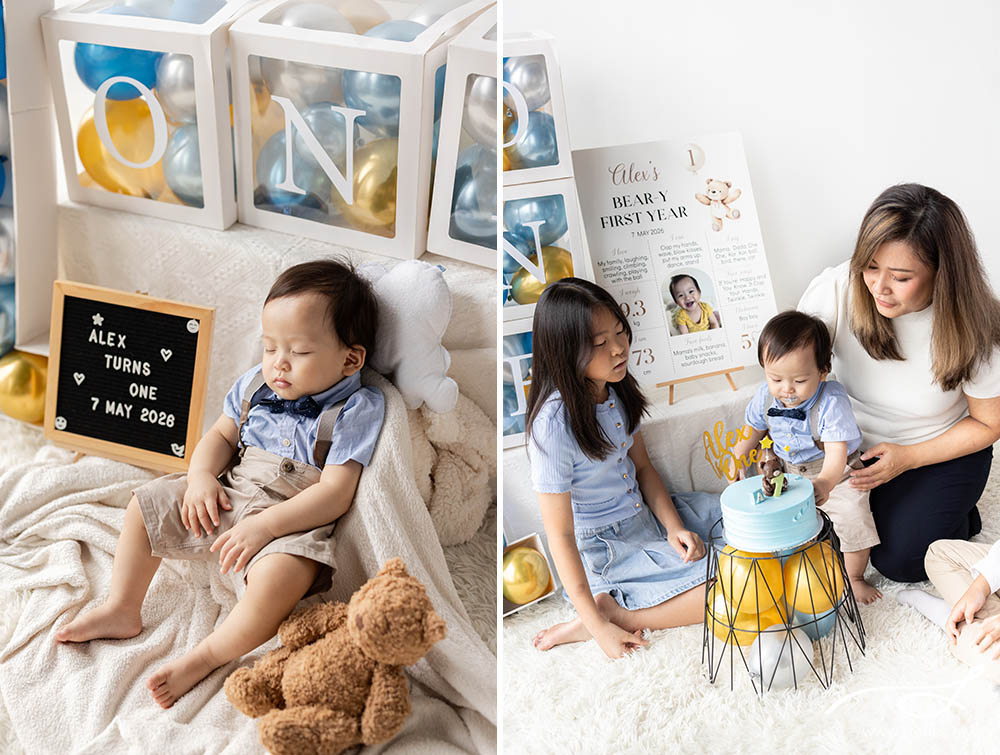
Lay Choo first came to the Stories studio in 2017, to photograph her firstborn, when she turned one. It was a fun photo shoot with the entire family, which included a cake smash and a quick bath immediately after, right in our studio. That simple action of booking a photo shoot soon turned into a tradition. She came back again for her 2nd child’s first birthday in 2021, and then again this year for her 3rd child’s 1st birthday!
Every time, we would have a cake, a mini celebration and a bath at the studio. That was really cute to see how one bathtub became a storyline over so many years. The thing about traditions is that we do not necessarily see their value immediately. After the years have passed, these traditions become a special keepsake that is cherished.
Her first photo session in 2017
The second session in 2021
The 3rd session in 2026
Funnily, during our recent session this year, little Alex fell asleep halfway through the photo session. After a power nap, he woke up in time to savour his birthday cake!
Our company has been in existence since 2008 (we’re 18 this year!), so we have photographed many families through the years. It is our joy to see the children grow through the years. Thank you so much for choosing us, over and over again.


 Credits: Photography by Jon
 It’s more than just a baby bump
 The second answer:
 But is a maternity photoshoot worth the investment?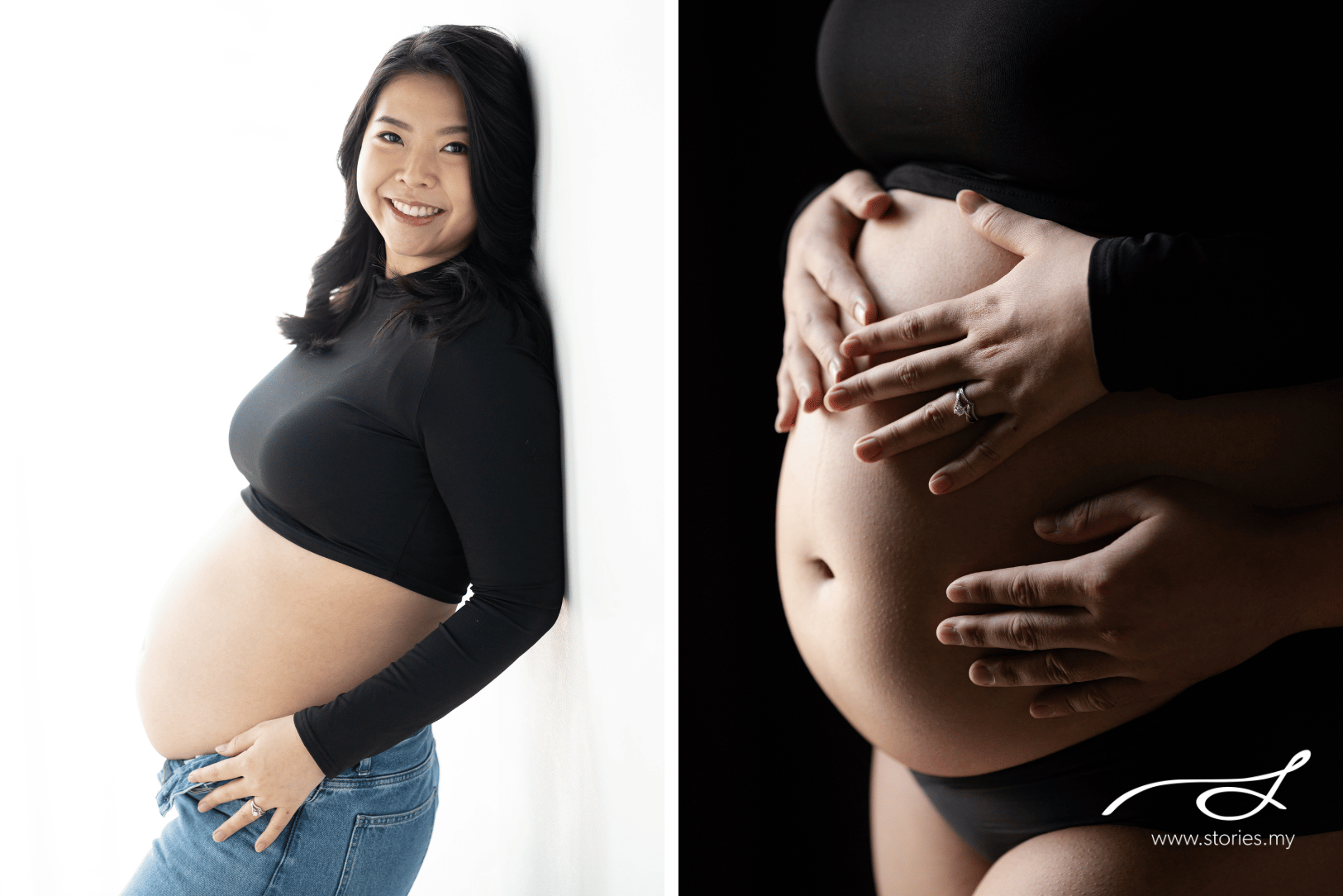

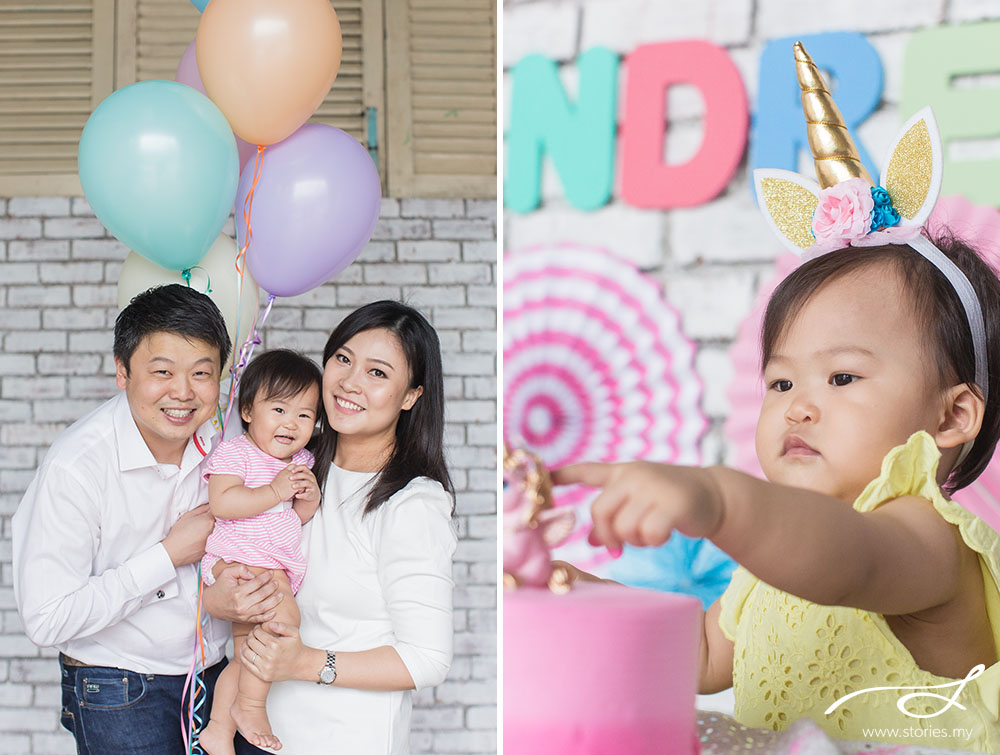 Her first photo session in 2017
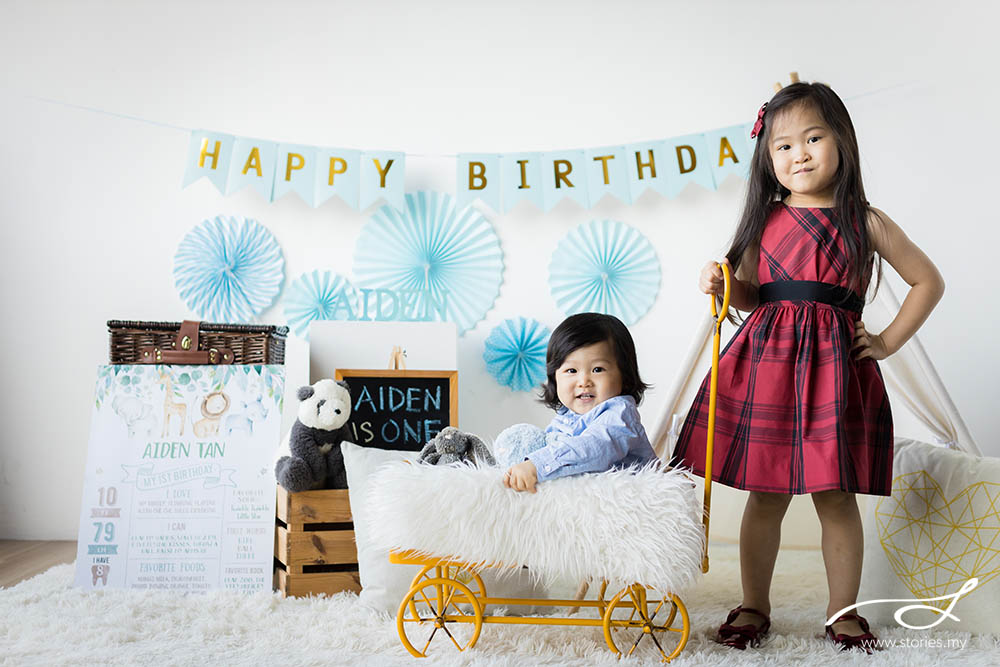 The second session in 2021
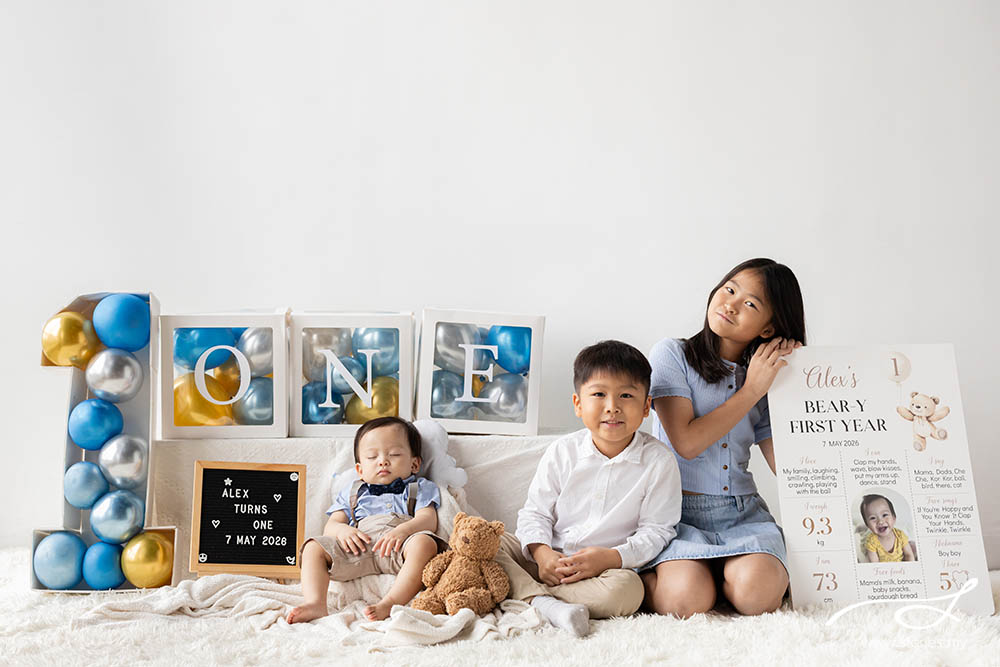 The 3rd session in 2026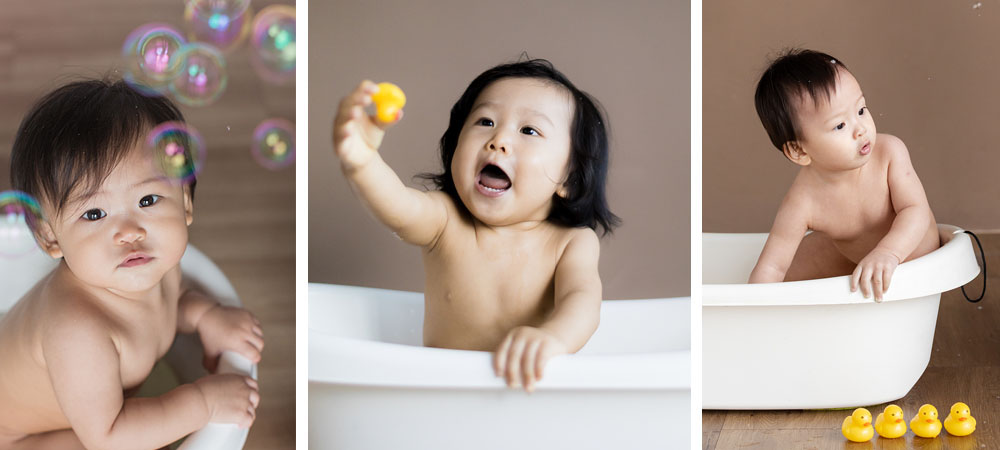

 Our company has been in existence since 2008 (we’re 18 this year!), so we have photographed many families through the years. It is our joy to see the children grow through the years. Thank you so much for choosing us, over and over again.
I first met Azran Osman-Rani at an ICF coaching event. He struck me immediately as down to earth, casual, approachable, the kind of person you forget is a CEO within five minutes of talking to him. Months later I had the pleasure of getting to know him better when I invited him to speak at one of the ICF events I organized for International Coaching Week. So when the invitation came to photograph his akad nikah, I felt genuinely privileged. It was not just another wedding. It was a chance to witness something quieter and more personal than the version of Azran most people know.
That quieter side runs through his whole story with Patricia. They found each other on LinkedIn, of all places, through a discussion post about branding and marketing. Their first date was at La Bodega, where they ended up talking about climate change. From there it grew into something built on shared instincts: a love for cities like San Francisco, Sydney and Seoul, and an equal pull toward nature, Nepal, Kazakhstan, Bali. Somewhere in that balance, in a convertible on the Pacific Coast Highway or on a trail in the Himalayas, two people who present very differently to the world found a rhythm that works entirely their own way.
Their akad nikah reflected that same spirit. Held at the home of Azran’s sister Azleen, who poured her own vision into every detail, the setting carried a whimsical mossy green forest theme. Elegant yet informal. Classy yet relaxed. Surrounded only by family and close friends, it felt warm, personal and intimate. Thank you for giving me this privilege of being part of your special day, Azran and Patricia!